Wednesday, 8 October 2008
Lack of inspiration
I haven't had much inspiration to write new posts recently. This is not because I have completely lost interest in life; the topics I've been interested in have either been too personal (my love life), too nerdy (setting up web servers) or slightly confidential (my third year project). Perhaps my generally relaxed condition after the summer is also helping. Or rather, hindering.


Sunday, 28 September 2008
All you never wanted
Round my way, eBay is not the preferred way of disposing of unwanted items, nor is it Gumtree. It is not even the fantastic bulky item disposal service provided gratis by the council. No, indeed, we prefer to just put stuff out on the street. If it is stuff that we are proud of, or we don't care what people think of us, we put it in front of our house. Sometimes, if it's something we are not so proud of, we put it in the shrubbery across the road.
I recently disposed of quite a number of items in this way. I have to say, the quality of the items I left on the street was fairly high, knowing as I do, that items will only get taken if somebody can think of a use for them. 9in fact, I myself was temted by a few things, and did stop to pick up a couple of pens on my way to school.) Having said that, I surmised that I really have very little idea of what somebody else might come up with a use for, so I tried my luck with all kinds of things. I will itemise those things that I can remember. All these things have been taken, over the last week.
An electric lawnmower (working)
A Dyson vacuum cleaner (hmm, not quite working)
A small radio/cassette player
Assorted small tiles
A large tub of tile fixative
A coat
Some brocade curtains
Various rubber stamps and ink
Assorted stationary
A hostess trolley
Assorted plates
Two calor gas fires
Three calor gas bottles (2 were later returned!)
A speaker
A thermos flask
Two pyrex dishes with lids
A pink lamp
About 8 beautifully made shutters with louvres
The only things that did not get taken were:
Four white dining chairs (I took them inside after 3 days when it rained, and decided I should keep them)
A box of large tiles (I'm leaving them outside:somebody must want them)
A canister of diesel oil
Two walnut effect curved cabinet doors (when my neighbour said he thought it unlike that anyone would take them, I mentioned that I had picked them up from outside somebody else's house)
A trestle table! I thought this would be highly desirable.
I recently disposed of quite a number of items in this way. I have to say, the quality of the items I left on the street was fairly high, knowing as I do, that items will only get taken if somebody can think of a use for them. 9in fact, I myself was temted by a few things, and did stop to pick up a couple of pens on my way to school.) Having said that, I surmised that I really have very little idea of what somebody else might come up with a use for, so I tried my luck with all kinds of things. I will itemise those things that I can remember. All these things have been taken, over the last week.
An electric lawnmower (working)
A Dyson vacuum cleaner (hmm, not quite working)
A small radio/cassette player
Assorted small tiles
A large tub of tile fixative
A coat
Some brocade curtains
Various rubber stamps and ink
Assorted stationary
A hostess trolley
Assorted plates
Two calor gas fires
Three calor gas bottles (2 were later returned!)
A speaker
A thermos flask
Two pyrex dishes with lids
A pink lamp
About 8 beautifully made shutters with louvres
The only things that did not get taken were:
Four white dining chairs (I took them inside after 3 days when it rained, and decided I should keep them)
A box of large tiles (I'm leaving them outside:somebody must want them)
A canister of diesel oil
Two walnut effect curved cabinet doors (when my neighbour said he thought it unlike that anyone would take them, I mentioned that I had picked them up from outside somebody else's house)
A trestle table! I thought this would be highly desirable.
Tuesday, 16 September 2008
Check in
I've returned from my summer in rural France. The contrast with my city existence is vivid. There, the pace of life is slow. My basic needs are provided for, so I don't have to spend lots of time thinking about and making my meals, I just show up. Work is generally simple: mowing, weeding, pruning and fixing tools. I don't read a lot; my entertainment is provided by my interactions with other people and nature. I have time set aside to practice meditation.
Here, things are much faster, especially when University starts (6 days to go). I have to travel on the underground, which in itself is a high pressure environment at rush hour. I dash from one lecture to another, to work, to meetings. My brain speeds up. I cram text books on the tube. To balance my schoolwork, I read textbooks from other subject areas: linguistics, psychology, cognitive science, biology, philosophy. Does that balance? Perhaps not. I try to keep up with friends' blogs and facebook activities. I try to keep on top of the latest technological and scientific advances.
And so on. It's busy, and the point I'm making is that the busier I get, the more I feel the need to fill the little gaps with more business. Sometimes I feel my head will explode. I will try to keep a lid on this tendency, a bit. Try to notice the world going by sometimes. Cook myself a slow meal from time to time. Take the time to really, properly communicate with someone. Just thinking about it slows me down a bit. I realise that that space, that peace, is important to me.
Here, things are much faster, especially when University starts (6 days to go). I have to travel on the underground, which in itself is a high pressure environment at rush hour. I dash from one lecture to another, to work, to meetings. My brain speeds up. I cram text books on the tube. To balance my schoolwork, I read textbooks from other subject areas: linguistics, psychology, cognitive science, biology, philosophy. Does that balance? Perhaps not. I try to keep up with friends' blogs and facebook activities. I try to keep on top of the latest technological and scientific advances.
And so on. It's busy, and the point I'm making is that the busier I get, the more I feel the need to fill the little gaps with more business. Sometimes I feel my head will explode. I will try to keep a lid on this tendency, a bit. Try to notice the world going by sometimes. Cook myself a slow meal from time to time. Take the time to really, properly communicate with someone. Just thinking about it slows me down a bit. I realise that that space, that peace, is important to me.
Monday, 7 July 2008
On Vision
One of the modules that I did at university, Graphical User Interface design, involved a certain amount of cognitive science, which interests me greatly, and I have been reading around that subject since. How vision works is particularly complex and interesting. At the moment I'm reading two books on this subject: "Visual Intelligence" by Donald D. Hoffman and "Eye And Brain" by Richard L. Gregory. They cover similar ground: the way that our brain interprets the data which is coming into our brain from our retinas. Rather than vision being a passive process, in which what's 'out there' reflects light through our eyes giving some kind of analogue reflection that directly affects our brain, the visual processing areas of the cortex are interpreting huge amounts of ambiguous data to produce what usually appears to us a consistent and seamless experience of sight.
This is such an important and revolutionary idea, and one that I, for one, find very hard to get my head around, that I will dwell on this for a little longer. It's very natural for us to assume that what we are seeing relates very simply and directly with what is out there; in fact for most of us for our idea of reality is based very strongly on what we think that we're seeing. Interestingly, if we have a vivid dream and then wake up, it doesn't take long for us to dismiss the visual experience that we were having as purely illusory. But in normal waking life, the sighted amongst us usually rely very heavily on our vision. If perspective starts jumping around or colours begin to shift, it is a very unsettling experience. Current scientific thinking is that the reason that these phenomena don't usually happen is that part of the brain is actively preserving the consistency and logic of our perceptions.
So how do we know this? As is often the case in biological matters, we see the underlying structure by implication, when things go wrong. In the case of vision, this is either when part of a person's brain is damaged and we observe the way that they interpret or misinterpret what they see, or in the optical illusions which affect all of us. Brain damage can in fact show us very specific vision modules, by their absence in those with damage to a particular area of the brain.
Optical illusions are a compelling way of demonstrating the ways that we interpret our visual world. There are many different types of illusions, each type demonstrating one way in which we interpret, by showing an anomaly or ambiguity. I'm sure most of us have seen illusions such as those which have two converging straight lines, overlaid onto which are two rectangles of the same size. Where the converging lines are closer together the rectangle looks bigger. Clearly this is something to do with our perception of perspective. If we are looking at receding railway tracks, and on the tracks are two objects which look the same size, we know that in fact the further one must be bigger. What's interesting here though is that is not simply a question of thinking that the shape which appears to be further away is bigger; we actually see it as bigger.
This may seem a minor point, but it immediately undermines the idea that our visual world is a direct analogue to what is going on around us. And it demonstrates that there are certain rules being applied in how we perceive the world: in this case, interpreting lines that converge as representing distance. There are many other optical illusions each of which demonstrates another facet of this active process of perception. We could call these facets rules: rules that govern the way that we interpret the ambiguous data which our eyes present to us. These are hard wired into our brain somehow.
Linguists may notice an interesting parallel here. Noam Chomsky's theories about the Universal Grammar, which is hard wired into our brains, are very similar. To those who are not familiar with these ideas, I'll try to give a brief account here. The acquisition of language by children has been a matter of debate for many years. Noam Chomsky, that most famous of linguists and social activists, proposed that all humans are innately engineered to communicate with language, hence the almost effortless manner in which children acquire language; in other words, that there are a set of rules which govern the way in which people use language constructs, an idea that he, perhaps confusingly, calls Universal Grammar (although some of his ideas are not completely original: many philosophers and mathematicians throughout the ages have proposed some kind of universality of language).
The funny thing is, that we often think that we are teaching our children to talk. We spend hours looking at pictures of animals with them, and are thrilled when they begin to associate the sounds of their names with the pictures in the book. And when a child begins to communicate, it is a magical time. What we might fail to notice, however, is the amazing ability of a child to construct grammatical sentences. The errors that the child makes in the early stages of talking highlight this. Having observed that past participles are constructed by adding a D sound to the end of the word, as in 'looked', 'tried', the child may say "I go'd to the shop". Presented with a certain amount of evidence of how sentences are formed, the child knows how to construct any number of sentences that will conform to the same rules. It is when there is an irregularity in the grammar of that language that the child will make a mistake.
This is such an important and revolutionary idea, and one that I, for one, find very hard to get my head around, that I will dwell on this for a little longer. It's very natural for us to assume that what we are seeing relates very simply and directly with what is out there; in fact for most of us for our idea of reality is based very strongly on what we think that we're seeing. Interestingly, if we have a vivid dream and then wake up, it doesn't take long for us to dismiss the visual experience that we were having as purely illusory. But in normal waking life, the sighted amongst us usually rely very heavily on our vision. If perspective starts jumping around or colours begin to shift, it is a very unsettling experience. Current scientific thinking is that the reason that these phenomena don't usually happen is that part of the brain is actively preserving the consistency and logic of our perceptions.
So how do we know this? As is often the case in biological matters, we see the underlying structure by implication, when things go wrong. In the case of vision, this is either when part of a person's brain is damaged and we observe the way that they interpret or misinterpret what they see, or in the optical illusions which affect all of us. Brain damage can in fact show us very specific vision modules, by their absence in those with damage to a particular area of the brain.
Optical illusions are a compelling way of demonstrating the ways that we interpret our visual world. There are many different types of illusions, each type demonstrating one way in which we interpret, by showing an anomaly or ambiguity. I'm sure most of us have seen illusions such as those which have two converging straight lines, overlaid onto which are two rectangles of the same size. Where the converging lines are closer together the rectangle looks bigger. Clearly this is something to do with our perception of perspective. If we are looking at receding railway tracks, and on the tracks are two objects which look the same size, we know that in fact the further one must be bigger. What's interesting here though is that is not simply a question of thinking that the shape which appears to be further away is bigger; we actually see it as bigger.
This may seem a minor point, but it immediately undermines the idea that our visual world is a direct analogue to what is going on around us. And it demonstrates that there are certain rules being applied in how we perceive the world: in this case, interpreting lines that converge as representing distance. There are many other optical illusions each of which demonstrates another facet of this active process of perception. We could call these facets rules: rules that govern the way that we interpret the ambiguous data which our eyes present to us. These are hard wired into our brain somehow.
Linguists may notice an interesting parallel here. Noam Chomsky's theories about the Universal Grammar, which is hard wired into our brains, are very similar. To those who are not familiar with these ideas, I'll try to give a brief account here. The acquisition of language by children has been a matter of debate for many years. Noam Chomsky, that most famous of linguists and social activists, proposed that all humans are innately engineered to communicate with language, hence the almost effortless manner in which children acquire language; in other words, that there are a set of rules which govern the way in which people use language constructs, an idea that he, perhaps confusingly, calls Universal Grammar (although some of his ideas are not completely original: many philosophers and mathematicians throughout the ages have proposed some kind of universality of language).
The funny thing is, that we often think that we are teaching our children to talk. We spend hours looking at pictures of animals with them, and are thrilled when they begin to associate the sounds of their names with the pictures in the book. And when a child begins to communicate, it is a magical time. What we might fail to notice, however, is the amazing ability of a child to construct grammatical sentences. The errors that the child makes in the early stages of talking highlight this. Having observed that past participles are constructed by adding a D sound to the end of the word, as in 'looked', 'tried', the child may say "I go'd to the shop". Presented with a certain amount of evidence of how sentences are formed, the child knows how to construct any number of sentences that will conform to the same rules. It is when there is an irregularity in the grammar of that language that the child will make a mistake.
Thursday, 5 June 2008
Ice cold marketing
I mean really. Since when is cider drunk with ice? If you believe the marketers, forever. In medieval times, a villein would not be seen drinking un-iced cider, it's so traditional. It's so traditional, in fact, that people got bored of it in about 1940, just before home freezing became possible, so for all the time since then, we've been stupidly, ridiculously drinking cider without ice in it. But now, thanks to ultra-old fashioned Irish Magners, we've been educated as to the error of our ways, and are drinking cider over ice.
Kak!
More from the BBC on how easy it is to dupe the masses
Kak!
More from the BBC on how easy it is to dupe the masses
Sunday, 1 June 2008
Indoors/outdoors
I recently spent 10 days camping out in rural France, while attending Buddhist teachings. In that ten days I had as many minutes of access to the Internet. And in a way, that was ten minutes too long. For somebody who studies computer science, I can be remarkably unexcited about computers. Actually, I think I kind of have two lives. One is the life of my body, one is the life of my brain. My brain likes a lot of stimulation, constant activity. My body likes fresh air, walks, views, massage, good food. Lots of other things. My brain really just likes stimulation. Which includes studying, I suppose.
What makes me feel healthier is being outside, using my body, feeling the raw elements. Campfires and long walks. Being indoors hunched over a computer screen does not make me feel good.
I don't really have an answer as to how to resolve the two sides: I've been working with them, oscillating between the two, for many years now, without finding a happy medium.
I suppose I can't assume that other people have the same experience as myself, but I suspect that many of the tensions of the city could be shed with occasional immersion in a more natural "country" lifestyle.
Another thing that occurs to me is the oriental idea of the body-mind. That one's mind, or consciousness, is not separate from the physical body. I do find that my mind is calmed by treating my body well. And in meditation one positions the body in such away that the mind is stabilised. The beneficial effect of exercise on one's wellbeing is documented, and I'm sure most people have experienced the effect of a day's physical exertion leading to a satisfying feeling of repose in the evening.
Perhaps I'm still skirting the real issue, which is that in fact one's body is really one and the same as one's mind. That is the body which we truly inhabit is simply a projection of the mind. From an external point of view, one's body might be diseased, but one might still feel healthy. To say that actually the person is sick is churlish. The person's experience is that they are healthy. Likewise somebody might be in "perfect" health from the point of view of a medical checkup, but feel sick. Telling them that they are fine is not going to stop them feeling sick. Most likely they will assume the medical practictioner is missing something.
Well, those are my musings for the day. As so often is the case, I feel as though if I were a bit brighter I might be able to articulate something worthwhile... sigh!
What makes me feel healthier is being outside, using my body, feeling the raw elements. Campfires and long walks. Being indoors hunched over a computer screen does not make me feel good.
I don't really have an answer as to how to resolve the two sides: I've been working with them, oscillating between the two, for many years now, without finding a happy medium.
I suppose I can't assume that other people have the same experience as myself, but I suspect that many of the tensions of the city could be shed with occasional immersion in a more natural "country" lifestyle.
Another thing that occurs to me is the oriental idea of the body-mind. That one's mind, or consciousness, is not separate from the physical body. I do find that my mind is calmed by treating my body well. And in meditation one positions the body in such away that the mind is stabilised. The beneficial effect of exercise on one's wellbeing is documented, and I'm sure most people have experienced the effect of a day's physical exertion leading to a satisfying feeling of repose in the evening.
Perhaps I'm still skirting the real issue, which is that in fact one's body is really one and the same as one's mind. That is the body which we truly inhabit is simply a projection of the mind. From an external point of view, one's body might be diseased, but one might still feel healthy. To say that actually the person is sick is churlish. The person's experience is that they are healthy. Likewise somebody might be in "perfect" health from the point of view of a medical checkup, but feel sick. Telling them that they are fine is not going to stop them feeling sick. Most likely they will assume the medical practictioner is missing something.
Well, those are my musings for the day. As so often is the case, I feel as though if I were a bit brighter I might be able to articulate something worthwhile... sigh!
Wednesday, 14 May 2008
Into the Wild
This morning my alarm was most unwelcome at 8. I had to drag my body out of bed, to the table, where I checked that my exam was at 10. The sheet says it's tomorrow. I find it hard to believe, as my timetable is firmly in my head, and it's today. But I have to believe the blue official-ness of the paper. I go back to bed, now only worried as to whether the shock will have made me unable to sleep. I doze for a while then sink into strange vivid dreamworld.
I am taking a party of fellow students to visit another student's house. Her father is going to pick us up from the train station. We arrive, and mill around with the hundreds of other people there, some of them other people I know. My phone rings and it's Jason, who is the brother of the person we've come to visit (at least in the dream, in real life he's the brother of a friend of mine from years back). I say "where are you" and he replies "look in the mirror". There being no mirror in sight, I look behind me, but he says, "no, look in the mirror". Then he says nothing more, but I hold the phone to my ear still, listening to the faint white noise.
I am taking a party of fellow students to visit another student's house. Her father is going to pick us up from the train station. We arrive, and mill around with the hundreds of other people there, some of them other people I know. My phone rings and it's Jason, who is the brother of the person we've come to visit (at least in the dream, in real life he's the brother of a friend of mine from years back). I say "where are you" and he replies "look in the mirror". There being no mirror in sight, I look behind me, but he says, "no, look in the mirror". Then he says nothing more, but I hold the phone to my ear still, listening to the faint white noise.
Wednesday, 7 May 2008
Blessed Relief
People told me that I would probably do better in my exams than I thought I would. After my second (of seven) exams this morning, I'm beginning to think they were right. I've already had the two I was most worried about, and I think I did ok. When I had attempted past papers at home, I had been pretty stumped. The papers did not just highlight some areas where my knowledge was lacking, the whole glorious fraud of my student career seemed brilliantly illuminated.
Perhaps these papers were harder than those of the last couple of days, perhaps the last minute cramming I did managed to fill the voids. But I suspect a large factor was my sheer inability to muster any kind of excitement about doing the mock exams, whereas the real things carry some power to wake me up and shine light into the dark corners of my knowledge.
Perhaps these papers were harder than those of the last couple of days, perhaps the last minute cramming I did managed to fill the voids. But I suspect a large factor was my sheer inability to muster any kind of excitement about doing the mock exams, whereas the real things carry some power to wake me up and shine light into the dark corners of my knowledge.
Wednesday, 30 April 2008
The flora of my garden

My garden is what you might call a small pseudo-woodland. Those who have seen it are probably already giggling, as it could equally accurately be described as a neglected mess, but bear with me, please.
The high storey of vegetation consists of sycamore trees (Acer pseudoplatanus), in my and my neighbours' gardens. The understorey contains large shrubs like elder (Sambucus nigra) and Forsythia. The groundcover consists largely of buttercup, or celandine (Ranunculus ficaria), bluebells (Hyancinthus) and spurge (Euphorbia). At the moment, there is an attractive burst of their various colours - the blue, white and pink bluebells, the green flowers of the spurge and the orangey-gold of the buttercups set each other off well.
One could certainly call that a typical woodland flora. There are a few anomalies, though. Sycamores are not native to the UK, they have naturalised over the last few hundred years. Because they have not co-existed with the insects of this country for all that long, they do not provide habitat for many species. Anyone who has parked their car under a sycamore in spring or summer and had it covered in honeydew (excreted by aphids in their millions) may dispute this point. I'm speculating here, but the non-native status of sycamore may just explain why aphids are so abundant on it. My hypothesis is that few of aphid's natural predators have found their niche in sycamore trees, whereas the aphids themselves have.
The bluebells are probably not native, either. These are unlikely to be the native bluebell found in old woodland throughout England, but more likely the larger Italian species, or a hybrid between them. Again, purists and ecologists would regard them as inferior to the native species, as they have not cohabited, so to speak, with the natives, so they do not have an established role in the ecosystem. I'm assuming that this is also the case with the spurges, as I don't think a native spurge would grow to almost three feet tall, as those in my garden do.
Funnily enough, the celandine is native, although it is regarded as a problem species in gardens, being very hard to eradicate. It's also known as pilewort, as it is reputed to help with the irritating condition called piles. Another hypothesis: that it has acquired this name through the shape of its miniature tubers (which scatter when you try to remove it - so often when inexperienced gardeners are weeding, instead of achiving the desired result of removing the plant, they are actually propagating multiple clones) - enough said.
Other vegetation includes nettles (Urtica dioica, native and lovely), lemon balm (Melissa officinalis, not native), Fatsia japonica (maybe native to Japan?) and loads of ivy (Hedera helix, native). There used to be a California lilic (Ceanothus) but it died. There's also a lot of a pretty variegated dead-nettle, don't know the Latin. Relics of previous tended gardens include a climbing pink rose, pampas grass, reeds. Weedy trees such as the sycamore and also the native ash (Fraxinus Exelsior, native) are seeding themselves. There are occasional brambles, although I tend to pull them out if I ever go out there, as they trip me up.
The common factor in most of these plants is that they are shade-tolerant. Obviously, that 's a big advantage in a woodland, and in a neglected patch of shady land, I suppose those are the species that will thrive.
I have occasionally thrown a few seeds on some bare soil, but nothing I have planted has been able to compete with the established vegetation. I don't think I'll try again. Many of the species may not be true natives, but they're doing OK and amidst the chaos, lots of insects and larger animals can find a niche.
Tuesday, 29 April 2008
Exam stress and fish
Seesaw is the word, I think, to describe my stress level fluctuation. It's funny to me how ubiquitous the term stressed has become when describing how one is feeling. In engineering terms, stress is a measure of how much force is acting on an object. Clearly, the meaning is quite different when applied to a human. But everyone seems to know what I'm talking about when I say I'm stressed. Strain, by the way, is the deformation which occurs to objects under stress. I think I've been feeling the strain, too!
Anyway, exams are nearly upon my fellow students and myself. I find myself getting stressed to the point where I can't think any more. I have done a little training in maintaining one's awareness in high stress situations (providing security to visiting dignitaries), and I recognise that cognitive impairment is a normal result of stress. In fact, there is an interesting progression in impairments as the level of stress one is under increases. I can't remember the details too well, but other things that are affected by rising adrenaline are one's fine motor skills (relatively quickly) and at some point gross motor skills (if these decline, you're really in trouble). In other words, if you think someone's about to attack you when returning home late at night, you might struggle to insert your doorkey into the lock. You'll probably retain the ability to turn around and knock them flying (before realising it's your inebriated flatmate).
Anyway, the level of stress that exam revision gives me is a more chronic one, rather than an acute attack. I wake up in the morning and think "Oh, God, I have to get myself together for my exams'" and the feeling often stays with me all day. Certain things help: ironically not the things one would expect. Although actually doing some revision is of course important, I've found it equally important to get out of the house periodically: to go shopping, to visit friends, or just to have a walk. Exercise has been good: my friend has been teaching me a bit of yoga. The pain took my mind right off the exams!
I was also lucky enough to spend a few days in Menorca last week. And I found the best cure for stress. Swimming in the icy sea with hundreds of fish all around me.
Anyway, exams are nearly upon my fellow students and myself. I find myself getting stressed to the point where I can't think any more. I have done a little training in maintaining one's awareness in high stress situations (providing security to visiting dignitaries), and I recognise that cognitive impairment is a normal result of stress. In fact, there is an interesting progression in impairments as the level of stress one is under increases. I can't remember the details too well, but other things that are affected by rising adrenaline are one's fine motor skills (relatively quickly) and at some point gross motor skills (if these decline, you're really in trouble). In other words, if you think someone's about to attack you when returning home late at night, you might struggle to insert your doorkey into the lock. You'll probably retain the ability to turn around and knock them flying (before realising it's your inebriated flatmate).
Anyway, the level of stress that exam revision gives me is a more chronic one, rather than an acute attack. I wake up in the morning and think "Oh, God, I have to get myself together for my exams'" and the feeling often stays with me all day. Certain things help: ironically not the things one would expect. Although actually doing some revision is of course important, I've found it equally important to get out of the house periodically: to go shopping, to visit friends, or just to have a walk. Exercise has been good: my friend has been teaching me a bit of yoga. The pain took my mind right off the exams!
I was also lucky enough to spend a few days in Menorca last week. And I found the best cure for stress. Swimming in the icy sea with hundreds of fish all around me.
Tuesday, 22 April 2008
Eliza and Tony
Eliza has been in the news a bit recently. She was the computer program back in the sixties, I think, that could act like a psychotherapist. All she, let's say 'it' did was to make encouraging or challenging comments, feeding back a little of what someone had said to it.
Anyway, I was just reading various blogs on technology, and I found one which works the other way around. I think the writer is actually a human, but he does a good impression of a lifeless robot! I was going to be nasty and include a link, but I found out that you can search for who links to your blog at blog search. You just type in "link:your-blog-here.blogspot.com" and it tells you who links to your blog. So Tony might have been a bit miffed, if he is indeed human.
Anyway, I was just reading various blogs on technology, and I found one which works the other way around. I think the writer is actually a human, but he does a good impression of a lifeless robot! I was going to be nasty and include a link, but I found out that you can search for who links to your blog at blog search. You just type in "link:your-blog-here.blogspot.com" and it tells you who links to your blog. So Tony might have been a bit miffed, if he is indeed human.
A new use for a USB stick
Also known as pen drives, flash drives or memory sticks, these little devices are used by many of my fellow students to carry their work around on, so that it's available whatever computer they are using. You can now get 4 gig ones, big enough to carry large movies. Mine is 256 megabytes; I only bought it because there is a minimum amount for a card transaction in the College shop. I've rarely used it, instead relying on SSH, email, google docs and my laptop to carry stuff around, but mostly relying on not bothering to organise stuff so that I have lots of different versions of my work on different computers. I have to say, I wouldn't recommend it as a way of working.
Included in Windows Vista is a nice little feature that enables you to use your flash memory as virtual memory. What's virtual memory? Ok, a little explanation for those that are interested. Programs that run on your computer use memory, right? Also known as RAM, this stuff is (usually) volatile (i.e. what's on it is lost when you turn off the machine) and fast. In fact it's many, many times faster to access than a hard drive. There are other memories on your computer which are faster, namely the caches, which store bits of memory which are accessed frequently, and, fastest of all, the registers, which store tiny snippets of vital stuff, like what line of the program comes next. The latter two things are generally on the processor chip itself.
So when you start a program, it will load some or all of itself into memory. There is typically a maximum of 4 gigabytes of addressable memory in a desktop machine, hence the limit on how much RAM you can install. In the past this limit was absolute: you couldn't write a program that needed more that 4 gigs (and it would have been unthinkable in the days when this limit was set) and all the running programs could add up to no more than that figure. Indeed, the limit was usually a lot less, depending on how much actual memory was in your machine. I remember my iMac telling me No you can't start another program up.
The workaround for these problems is what is known as Virtual Memory. To say it simply, this involves allocating space on the hard drive which can be used to store parts of running programs. Usually a program will be using only some of it's code at any time, so large chunks can be written out into the hard drive. If that bit is needed, it's fetched again. This of course takes time, so there are ways of guessing whether particular bits of code will not be needed. Sometimes when you're doing a lot on the computer, it can pause for a time. This background process of swapping stuff onto and off the hard drive is one of the reasons. If you're not using a program, but it's still open in the background, much of the memory used can be swapped out, so when you start to try to work with it again, it can take quite a while to "warm up".
In order to make this process faster, you need a virtual memory storage that is faster to read than a hard drive. That's where flash memory comes in. It's cheap and much quicker than a HD. Recognising that, Microsoft have enabled flash memory in the form of USB sticks to be used for a certain amount of VM. Sorry, getting a bit acronym heavy. That seems to happen in IT. Urg. Within the settings for the stick you can allocate a certain proportion of it to be used for VM. The computer will then recognise it and use it whenever you insert it. And apparently you can remove it at any time, with the only penalty that you lose the speed advantage again.
I have yet to try it, as it seems my USB stick has give up the ghost. But I will. I'm looking forward to seeing if it speeds up performance.
Included in Windows Vista is a nice little feature that enables you to use your flash memory as virtual memory. What's virtual memory? Ok, a little explanation for those that are interested. Programs that run on your computer use memory, right? Also known as RAM, this stuff is (usually) volatile (i.e. what's on it is lost when you turn off the machine) and fast. In fact it's many, many times faster to access than a hard drive. There are other memories on your computer which are faster, namely the caches, which store bits of memory which are accessed frequently, and, fastest of all, the registers, which store tiny snippets of vital stuff, like what line of the program comes next. The latter two things are generally on the processor chip itself.
So when you start a program, it will load some or all of itself into memory. There is typically a maximum of 4 gigabytes of addressable memory in a desktop machine, hence the limit on how much RAM you can install. In the past this limit was absolute: you couldn't write a program that needed more that 4 gigs (and it would have been unthinkable in the days when this limit was set) and all the running programs could add up to no more than that figure. Indeed, the limit was usually a lot less, depending on how much actual memory was in your machine. I remember my iMac telling me No you can't start another program up.
The workaround for these problems is what is known as Virtual Memory. To say it simply, this involves allocating space on the hard drive which can be used to store parts of running programs. Usually a program will be using only some of it's code at any time, so large chunks can be written out into the hard drive. If that bit is needed, it's fetched again. This of course takes time, so there are ways of guessing whether particular bits of code will not be needed. Sometimes when you're doing a lot on the computer, it can pause for a time. This background process of swapping stuff onto and off the hard drive is one of the reasons. If you're not using a program, but it's still open in the background, much of the memory used can be swapped out, so when you start to try to work with it again, it can take quite a while to "warm up".
In order to make this process faster, you need a virtual memory storage that is faster to read than a hard drive. That's where flash memory comes in. It's cheap and much quicker than a HD. Recognising that, Microsoft have enabled flash memory in the form of USB sticks to be used for a certain amount of VM. Sorry, getting a bit acronym heavy. That seems to happen in IT. Urg. Within the settings for the stick you can allocate a certain proportion of it to be used for VM. The computer will then recognise it and use it whenever you insert it. And apparently you can remove it at any time, with the only penalty that you lose the speed advantage again.
I have yet to try it, as it seems my USB stick has give up the ghost. But I will. I'm looking forward to seeing if it speeds up performance.
Sunday, 20 April 2008
I have eco balls

What these are are balls that you put into the washing machine when you do a load of laundry. They do the same job as washing powder or liquid, but last for much longer.And I think I could say that they work. Apparently "they produce ionized oxygen that activates the water molecules naturally and allows them to penetrate deep into clothing fibres to lift dirt away." They cost about £35, but should last long enough to do a thousand washes. That's a lot of money saved. I just read on the website that you can use a low temperature, short wash with them too. Pretty cool. They get the seal of approval.
Wednesday, 16 April 2008
My brain is decaying
I forgot to go to work on Sunday.
Yesterday I changed somebody's name on the library database. To a number!
I'm wondering what is next?
Yesterday I changed somebody's name on the library database. To a number!
I'm wondering what is next?
Tuesday, 15 April 2008
Is there a global electricity tide?
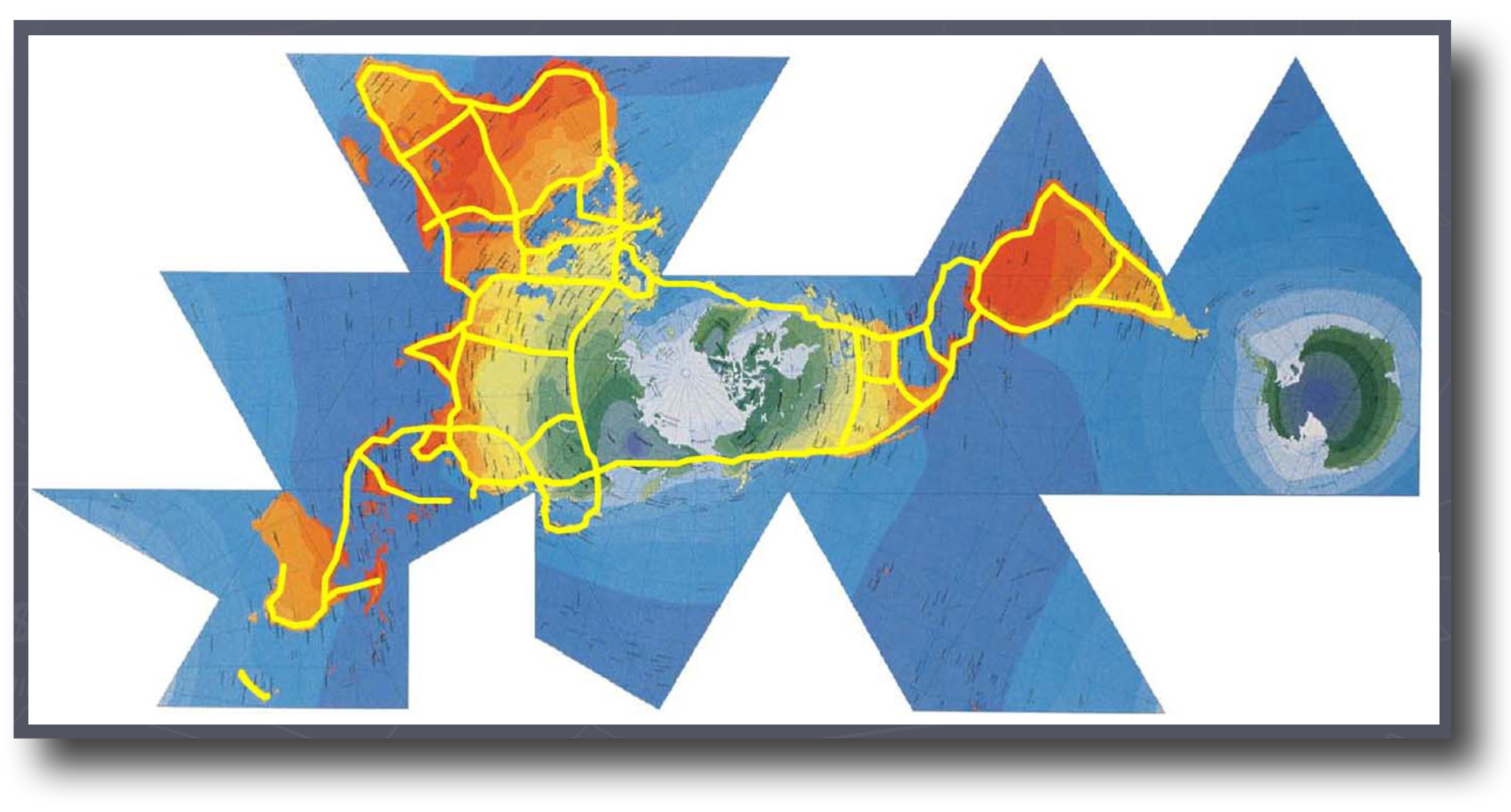
I was sitting on the bus thinking about electricity. As you do. Britain and France's national grids are connected, so that surplus energy in one network can be used by another. This is helpful because power stations tend to take a while to get up to full efficiency, so it is best to keep them running almost constantly. Power usage, however, rises and falls dramatically according to the time of day.
Having a national grid irons out some of the peaks and troughs, due to variations in power consumption across the country. Energy companies also sell night-time electricity at a discounted rate, often to businesses but also to consumers with storage heaters, that use power in the night and release the heat throughout the day.
The bigger the grid you have, the more that local variations are taken care of, by using power piped in from somewhere there is less demand. So it was a great leap forward to connect our little island with mainland Europe by underwater high voltage cables. We can now borrow electricity from France and they from us. The morning surge when people switch their kettles on happens an hour earlier in France, due to the time difference. So I expect we send them lots of power for that. Likewise we boil the kettle for our hot water bottles a little later than them.
Gas can be stored relatively easily, but to store electricity is prohibitively expensive and quite inefficient, so there exist various ways to store potential energy that has been created with electricity. In Wales there are a couple of 'pumped storage' power stations, that use cheap off-peak electricity to pump water up a few hundred metres to a reservoir. When there is a power surge, the plug is pulled and the water rushes down, though turbines and generates a lot of power for an hour or so.
Another proposed solution is to use pressurised air stored in huge natural cave systems. And a perhaps more practical option is to use the electricity to seperate Oxygen and Hydrogen in water. Hydrogen can be stored (although it is a lot more explosive than natural gas) and can run engines or fuel cells for static or mobile energy generation.
Anyway, my musing was more about whether the grids of France are connected to those of Germany and other countries . I was imagining this surge of power flowing westward towards the sunset. But having arrived in Ireland, where would it go? Are there transatlantic power cables? Somehow I doubt it. Guess I'll have to do a teeny bit of research, before starting my revision proper.
http://www.terrawatts.com/ - the page *for* a global electricity network
http://climate.blog.co.uk/2006/05/09/the_global_electricty_grid~786943 - an intelligent dissenter
http://www.smm.org/buzz/blog/think_globals_electric_car_city - a cool electric car project
http://www.hybridcars.com/news/car-electric-grid-utopia-caveats.html - more cool car stuff
Ok, these last couple were interesting in the sense that they are talking about car energy storage as a potentially two-way flow. In other words, the car is charged when it is cheapest, but could potentially be harnessed as an energy source at peak times. The last page linked to suggests "all the energy needs for the entire United States could be run for five hours from a nationwide fleet of plug-in hybrids, if those vehicles held enough battery energy to run a vehicle in all-electric mode for 33 miles". It sounds good, but are people really going to want to have their car batteries only partially charged?

Saturday, 12 April 2008
Dogs barking
I just spent half an hour stomping around in the little park, building up the steam needed to write an article complaining about dog owners. And you could say that I ended up with a full cylinder.
The problem is that the sugar transporting layer in a tree is just under the bark. If you remove the bark it damages that area, and if you remove the bark all the way around a tree it will kill the tree. In fact, ring barking, as it is known, is a forester's trick for killing unwanted trees.
One of the reasons why squirrels are generally disliked is that they chew off bark from the branches of trees, to get at the sweet sugar carrying layer beneath. That layer, called the phloem, is vital in allowing the tree to transport sugars, both up the branch or tree in spring and down later in the year. If a branch gets no sugar in spring, it will die. If the squirrels kill enough branches or ring bark the trunk of the tree, the tree effectively starves to death.
In the last few years one of the most common fashions for the younger people of this area has been to have a dog. Some of the more ferocious fighting dog breeds have been banned, so a Staffordshire terrier is the favourite. To strengthen the dog's teeth and jaws, their owners will often encourage them to hang from ropes from trees. In the event that all of the ropes have broken, they will use the trees themselves. So trees with low hanging branches soon end up with no or dead low branches, or pitiful splintered stubs.
A couple of times I have walked through the park and intervened when I've seen a dog doing this. I'm not sure if it was the same guy each time, but the reaction was, pretty much. It amounted to mind your own business, but in slightly less pleasant terms. I said, "Let's see what the police say about that," took out my phone, and feigned dialling the police. That seemed to have the desired effect.
In any case, between the two of them the dogs and the squirrels have killed several trees in the park. Actually, I'm pretty sure it was the squirrels, as the dogs weren't really around in order to have been responsible. I remember noticing that there were several standing dead trees and in retrospect, I remember that there were the telltale signs of ring barking around many of the upper branches. (Incidentally, when tree surgeons came and removed those trees from the park, I managed to persuade them to give me a lot of the wood, which I occasionally burn downstairs in the fireplace.)
Partly I'm sure that the problem is just ignorance on the part of the owners of the dogs. In fact I think a lot of people suffer from the delusion that trees are a solid and permanent part of the landscape. And certainly don't think that they could be responsible for major injury or death to a tree. I hope that it is ignorance alone which explains the fact that a beautiful, medium sized lime tree has been almost completely ring barked. I'm sure that this is not squirrels, because it is at ground level and I think that the bark is too thick for their small teeth anyway.
I expect that that tree will die. But it may take some time, and the dog owner responsible may never be aware of the destruction that they have caused.
The problem is that the sugar transporting layer in a tree is just under the bark. If you remove the bark it damages that area, and if you remove the bark all the way around a tree it will kill the tree. In fact, ring barking, as it is known, is a forester's trick for killing unwanted trees.
One of the reasons why squirrels are generally disliked is that they chew off bark from the branches of trees, to get at the sweet sugar carrying layer beneath. That layer, called the phloem, is vital in allowing the tree to transport sugars, both up the branch or tree in spring and down later in the year. If a branch gets no sugar in spring, it will die. If the squirrels kill enough branches or ring bark the trunk of the tree, the tree effectively starves to death.
In the last few years one of the most common fashions for the younger people of this area has been to have a dog. Some of the more ferocious fighting dog breeds have been banned, so a Staffordshire terrier is the favourite. To strengthen the dog's teeth and jaws, their owners will often encourage them to hang from ropes from trees. In the event that all of the ropes have broken, they will use the trees themselves. So trees with low hanging branches soon end up with no or dead low branches, or pitiful splintered stubs.
A couple of times I have walked through the park and intervened when I've seen a dog doing this. I'm not sure if it was the same guy each time, but the reaction was, pretty much. It amounted to mind your own business, but in slightly less pleasant terms. I said, "Let's see what the police say about that," took out my phone, and feigned dialling the police. That seemed to have the desired effect.
In any case, between the two of them the dogs and the squirrels have killed several trees in the park. Actually, I'm pretty sure it was the squirrels, as the dogs weren't really around in order to have been responsible. I remember noticing that there were several standing dead trees and in retrospect, I remember that there were the telltale signs of ring barking around many of the upper branches. (Incidentally, when tree surgeons came and removed those trees from the park, I managed to persuade them to give me a lot of the wood, which I occasionally burn downstairs in the fireplace.)
Partly I'm sure that the problem is just ignorance on the part of the owners of the dogs. In fact I think a lot of people suffer from the delusion that trees are a solid and permanent part of the landscape. And certainly don't think that they could be responsible for major injury or death to a tree. I hope that it is ignorance alone which explains the fact that a beautiful, medium sized lime tree has been almost completely ring barked. I'm sure that this is not squirrels, because it is at ground level and I think that the bark is too thick for their small teeth anyway.
I expect that that tree will die. But it may take some time, and the dog owner responsible may never be aware of the destruction that they have caused.
Sunday, 6 April 2008
Today I am mostly...
..in pain. My back has seized up. Actually, I woke up with a stiff upper back and neck a few days ago. But today it is much worse, for no obvious reason. I've got a rolled towel around my neck. Along with my stiff bearing, it makes me look like a character from an Oscar Wilde.
Ouch.
Ouch.
Tuesday, 1 April 2008
Further reflections on speech input and mind maps
So having done a bit of research on the Internet, I have not managed to find any mind mapping software with built in speech recognition, neither one that implements Microsoft's speech recognition interface. Sounds like a great third year project!
My musings took me further: the web itself is a nonlinear map of chunks of information, as I said. So what about a mind mapping technology that not only will display a mind map, but would also generate web pages based on the map.
Actually, mind mapping technology does not seem that difficult to construct. Certainly compared to speech recognition technology. If that speech recognition technology is available as an interface (not being a professional software developer, I maybe using the wrong terms here, apologies), then the truly hard bit has already been done for you.
By the way, the reason that I'm writing these musings into my blog is that I have not yet found a very useful tool for jotting down these preliminary thoughts. In the running are Microsoft's One Note, the new web-based tool EverNote, and one of the mind mapping tools, which I have not yet tried.
And I still haven't written what my real current idea for my third year project is.
My musings took me further: the web itself is a nonlinear map of chunks of information, as I said. So what about a mind mapping technology that not only will display a mind map, but would also generate web pages based on the map.
Actually, mind mapping technology does not seem that difficult to construct. Certainly compared to speech recognition technology. If that speech recognition technology is available as an interface (not being a professional software developer, I maybe using the wrong terms here, apologies), then the truly hard bit has already been done for you.
By the way, the reason that I'm writing these musings into my blog is that I have not yet found a very useful tool for jotting down these preliminary thoughts. In the running are Microsoft's One Note, the new web-based tool EverNote, and one of the mind mapping tools, which I have not yet tried.
And I still haven't written what my real current idea for my third year project is.
Musings on musings on third year projects
Finally the term is drawing to a close. We have handed in our last piece of work, and I have given myself permission to start relaxing, even if I have not really started that process. Actually, perhaps I have, a bit. I'm home, and I have poured myself a beer, and I found myself spontaneously singing some kind of religious chant-like song. Walking home from the tube a cacophony of thoughts erupted in my mind, on the subject of my third year project, which I had been discussing with another student who is just finishing off her third year
The truth is, I have so many ideas but it's very difficult to decide what to do. The remit is quite large with several different types of projects available. There are some suggested ones, but you can also come up with your own ideas. And ideas are something that I am not short of. In fact, in just rehearsing some of my ideas, I came up with a new idea, or rather, came up with an idea for a tool that will be particularly useful in brainstorming and planning my project.
It's actually quite a simple idea, that fuses two already existing technologies. What that is a is a fusion of Mind Map technology with speech recognition. As you may know, I'm dictating my blog, although I'm not dictating it straight into the text area within the browser, but using Wordpad, which enables all of the voice recognition shortcuts in Windows Vista, and then pasting it into the browser.
(Going contentedly in my usual way against the grain, I'm recommending Windows Vista to anybody that will listen. This is partly due to its prettiness, partly as a reaction to the torrent of abuse which has been hurled at it, and in no insignificant measure to the ease of use of the voice recognition software built in. The main difficulty that I am finding is, as I've mentioned above, the fact that some software has very good built in support for this technology, while others does not. I don't yet know why, but the fact that the good compliance is found within Microsoft software might give us a clue.)
Mind mapping is a way to collate or present information in a nonlinear way. When a policeman writes down notes in his little notebook, I'd be surprised if he did not write it down in a linear way: in other words as the information came to him he would add it after the previous chunk of information. In some ways this makes sense, because it does not waste space in the notebook. But the information is hardly likely to come to him in an ordered way.
Policeman: " Could you tell me what happened to you, starting with the details that will be crucial in our investigation, and leaving out anything irrelevant. I would prefer it if you gave it to me in chronological order, preferably with times of individual events." Well, it seems a little far-fetched.
So that information in the policeman's notebook is most likely written from left to right and from top to bottom, filling the pages. Very little structure. Of course, I'm making some assumptions about the policeman here. Apologies to any police who have much more effective ways of taking notes. I'm just making a point.
Now in contrast to that linear way of taking information, mind maps allow us to write down chunks of information in the order in which they appear, and make links between them. This is as simple as drawing each idea in its own little bubble and drawing lines between the bubbles to represent links. I have used this technique to plan essays, and found it to be very useful.
You might start with a central idea of your essay, or thesis, and as ideas linked to that occur to you (as will usually be the case, if you're a human being) you write them down in a linked bubble. As you have more ideas, more bubbles will appear with lines between them, and a spider-like structure appears on the paper in front of you. This explains another name for mind maps, spider diagrams.
(I have had quite a lot of ideas for new pieces of software over the last year or so, and a disturbing number of them have appeared on the market in that time. A part of me is hoping that simply by putting these thoughts down on paper I will cause the program I am imagining to exist.)
And what that program is, is simply a tool to make mind maps using one's voice. It is a very simple idea, and I can fully visualise the software in my head. If it does not exist, it is a definite candidate for a third year project, as I think it would be both relatively simple to implement and highly marketable. But the amusing thing is, that the reason I thought of it, was that I was thinking ahead to getting home and putting my ideas for my third year project into the computer.
Just like the policeman's notebook, this article is being written linearly. It actually puts a rather a dampener on some aspects of the creative process. Writing in this way is rather like deciding to go for a drive but your car turns out to be one of those small self-propelled vehicles on a railway track. You see some scenery but there's no way of turning off and exploring side avenues. Actually, I should qualify that, by the obvious assertion that I make so many asides and it's hard to tell what the main stream of the article is about. But in any case, you may see what I'm getting at.
So I sense another avenue of Internet research opening up before me. And of course, the Internet is the ultimate nonlinear information receptacle. I can start looking for one thing, but before long, I quickly find myself in a fascinating but completely unrelated area. It may be stretching a point but perhaps we could say that the Internet is the ultimate Mind Map.
The truth is, I have so many ideas but it's very difficult to decide what to do. The remit is quite large with several different types of projects available. There are some suggested ones, but you can also come up with your own ideas. And ideas are something that I am not short of. In fact, in just rehearsing some of my ideas, I came up with a new idea, or rather, came up with an idea for a tool that will be particularly useful in brainstorming and planning my project.
It's actually quite a simple idea, that fuses two already existing technologies. What that is a is a fusion of Mind Map technology with speech recognition. As you may know, I'm dictating my blog, although I'm not dictating it straight into the text area within the browser, but using Wordpad, which enables all of the voice recognition shortcuts in Windows Vista, and then pasting it into the browser.
(Going contentedly in my usual way against the grain, I'm recommending Windows Vista to anybody that will listen. This is partly due to its prettiness, partly as a reaction to the torrent of abuse which has been hurled at it, and in no insignificant measure to the ease of use of the voice recognition software built in. The main difficulty that I am finding is, as I've mentioned above, the fact that some software has very good built in support for this technology, while others does not. I don't yet know why, but the fact that the good compliance is found within Microsoft software might give us a clue.)
Mind mapping is a way to collate or present information in a nonlinear way. When a policeman writes down notes in his little notebook, I'd be surprised if he did not write it down in a linear way: in other words as the information came to him he would add it after the previous chunk of information. In some ways this makes sense, because it does not waste space in the notebook. But the information is hardly likely to come to him in an ordered way.
Policeman: " Could you tell me what happened to you, starting with the details that will be crucial in our investigation, and leaving out anything irrelevant. I would prefer it if you gave it to me in chronological order, preferably with times of individual events." Well, it seems a little far-fetched.
So that information in the policeman's notebook is most likely written from left to right and from top to bottom, filling the pages. Very little structure. Of course, I'm making some assumptions about the policeman here. Apologies to any police who have much more effective ways of taking notes. I'm just making a point.
Now in contrast to that linear way of taking information, mind maps allow us to write down chunks of information in the order in which they appear, and make links between them. This is as simple as drawing each idea in its own little bubble and drawing lines between the bubbles to represent links. I have used this technique to plan essays, and found it to be very useful.
You might start with a central idea of your essay, or thesis, and as ideas linked to that occur to you (as will usually be the case, if you're a human being) you write them down in a linked bubble. As you have more ideas, more bubbles will appear with lines between them, and a spider-like structure appears on the paper in front of you. This explains another name for mind maps, spider diagrams.
(I have had quite a lot of ideas for new pieces of software over the last year or so, and a disturbing number of them have appeared on the market in that time. A part of me is hoping that simply by putting these thoughts down on paper I will cause the program I am imagining to exist.)
And what that program is, is simply a tool to make mind maps using one's voice. It is a very simple idea, and I can fully visualise the software in my head. If it does not exist, it is a definite candidate for a third year project, as I think it would be both relatively simple to implement and highly marketable. But the amusing thing is, that the reason I thought of it, was that I was thinking ahead to getting home and putting my ideas for my third year project into the computer.
Just like the policeman's notebook, this article is being written linearly. It actually puts a rather a dampener on some aspects of the creative process. Writing in this way is rather like deciding to go for a drive but your car turns out to be one of those small self-propelled vehicles on a railway track. You see some scenery but there's no way of turning off and exploring side avenues. Actually, I should qualify that, by the obvious assertion that I make so many asides and it's hard to tell what the main stream of the article is about. But in any case, you may see what I'm getting at.
So I sense another avenue of Internet research opening up before me. And of course, the Internet is the ultimate nonlinear information receptacle. I can start looking for one thing, but before long, I quickly find myself in a fascinating but completely unrelated area. It may be stretching a point but perhaps we could say that the Internet is the ultimate Mind Map.
Who says computer textbooks are dull?
So it turns out that the great Hollywood star Hedy Lamarr played a role in enabling such technologies as Bluetooth. She had been married in Germany before the war to a man who made military equipment. He explained to her how easy it was to jam the guidance signal in enemy torpedoes. When she realised he was selling his products to the Nazis, she ran away from him, ending up in Hollywood. While there she seems to have invented a frequency-hopping transmitter, which generates a signal that is far harder to jam.
Bluetooth uses frequency-hopping to minimise collisions between messages that are being sent, both between Bluetooth devices and those on wifi, which uses the same frequencies.
I discovered this while reading my textbook on Networks, by Tanenbaum. Here is a link to the e-book:
http://books.google.co.uk/books?id=Pd-z64SJRBAC&dq=tanenbaum+networks&pg=PP1&ots=RBMSCs0ZhF&sig=nXybWj9LSUmHKpL9ACvcNbo44eQ&hl=en&prev=http://www.google.co.uk/search?q=tanenbaum+networks&ie=utf-8&oe=utf-8&rls=org.mozilla:en-GB:official&client=firefox-a&sa=X&oi=print&ct=title&cad=one-book-with-thumbnail
Bluetooth uses frequency-hopping to minimise collisions between messages that are being sent, both between Bluetooth devices and those on wifi, which uses the same frequencies.
I discovered this while reading my textbook on Networks, by Tanenbaum. Here is a link to the e-book:
http://books.google.co.uk/books?id=Pd-z64SJRBAC&dq=tanenbaum+networks&pg=PP1&ots=RBMSCs0ZhF&sig=nXybWj9LSUmHKpL9ACvcNbo44eQ&hl=en&prev=http://www.google.co.uk/search?q=tanenbaum+networks&ie=utf-8&oe=utf-8&rls=org.mozilla:en-GB:official&client=firefox-a&sa=X&oi=print&ct=title&cad=one-book-with-thumbnail
Sunday, 30 March 2008
A woodpecker in Brixton
I just had one of those magical experiences, that makes you forget that you live in the middle of a big city. For some years I have occasionally heard the sounds of what I thought to be a woodpecker - a resonant drumming sound in short bursts. Living in Brixton, though, I pretty much dismissed it, thinking it must have originated from some other source.
Today it's a warm sunny day, and so I decided to take a short walk to get a bit of air, and try to shake off a slight lingering hangover. As soon as I stepped into the park, I heard that familiar drumming sound. It seemed to be coming from a nearby tree, so I wandered over to investigate. Sure enough, high up on the dead branch of a sycamore tree, was a beautiful woodpecker, not the green kind you see on the side of a can of cider, but one with a red rump, a creamy white breast, and black and white stripes on its head and upper body. A quick search on the web indicates that it's a Great Spotted Woodpecker.
With its large powerful beak it was digging out grubs from the dead branch, in short percussive bursts. I don't know if it noticed me watching it, but within a minute or two it flew away to a lower branch on an adjacent tree. But in 10 minutes or so, when I was on the other side of the park, I heard it again and walked back to watch it's further endeavours.
I have always been fascinated by the boundary between tame and wild. I sometimes wonder what the city would look like in 10 years if it were abandoned. How far would wild crazy nature have encroached upon our seemingly corralled and controlled environment. Perhaps if we look closely, even now, we might see that what we think is a man made, man-centred world, is just a thin veneer on top of the untamed and untenable vast nature.
It gives me a strange kind of joy to find indications of nature's processes going on even in this big city. For a while I took pictures of stalactites and stalagmites forming on great concrete structures such as the London's South Bank Centre, underpasses, and council estates. Along with them I observed small fenced-off areas that had turned into rampant jungles, moss colonies on top of greenhouse roofs, the heave for of paving slabs from the inexorable pushing of tree roots, and the gradual disintegration of my clothing due to the moths that lay their eggs in my clothing drawer.
Today it's a warm sunny day, and so I decided to take a short walk to get a bit of air, and try to shake off a slight lingering hangover. As soon as I stepped into the park, I heard that familiar drumming sound. It seemed to be coming from a nearby tree, so I wandered over to investigate. Sure enough, high up on the dead branch of a sycamore tree, was a beautiful woodpecker, not the green kind you see on the side of a can of cider, but one with a red rump, a creamy white breast, and black and white stripes on its head and upper body. A quick search on the web indicates that it's a Great Spotted Woodpecker.
With its large powerful beak it was digging out grubs from the dead branch, in short percussive bursts. I don't know if it noticed me watching it, but within a minute or two it flew away to a lower branch on an adjacent tree. But in 10 minutes or so, when I was on the other side of the park, I heard it again and walked back to watch it's further endeavours.
I have always been fascinated by the boundary between tame and wild. I sometimes wonder what the city would look like in 10 years if it were abandoned. How far would wild crazy nature have encroached upon our seemingly corralled and controlled environment. Perhaps if we look closely, even now, we might see that what we think is a man made, man-centred world, is just a thin veneer on top of the untamed and untenable vast nature.
It gives me a strange kind of joy to find indications of nature's processes going on even in this big city. For a while I took pictures of stalactites and stalagmites forming on great concrete structures such as the London's South Bank Centre, underpasses, and council estates. Along with them I observed small fenced-off areas that had turned into rampant jungles, moss colonies on top of greenhouse roofs, the heave for of paving slabs from the inexorable pushing of tree roots, and the gradual disintegration of my clothing due to the moths that lay their eggs in my clothing drawer.
Friday, 28 March 2008
The End
Well, not quite, actually. We have finally handed in our software engineering project. most of it, at least. I'm writing this by hand, just for fun. It's not as fast as typing and I haven't found a very comfortable way to work with the computer, but I don't like typing on a laptop either. Anyway, when it was time to hand in the work, Usman and I decided to have a quick look at the game we have created, and to our horror, it didn't work, Usman began to panic, but it was really too late to do much else, So we have to just hope that they test it in Windows, in which it does work.
I'm tired now, as I was up most of the night, editing our final report. Actually, this is quite fun. I'm not having to do much correction, and I am writing as fast as possible, in a cursive script. Pretty damn cool. It's another rainy day here in Mile End. I could easily just curl up under the table and go to sleep. This form of input would be great for texting, actually. But maybe not so easy on a small screen. I think I'm rambling. will stop now.
I'm tired now, as I was up most of the night, editing our final report. Actually, this is quite fun. I'm not having to do much correction, and I am writing as fast as possible, in a cursive script. Pretty damn cool. It's another rainy day here in Mile End. I could easily just curl up under the table and go to sleep. This form of input would be great for texting, actually. But maybe not so easy on a small screen. I think I'm rambling. will stop now.
Sunday, 23 March 2008
Trees do not heal - they just shut off
It's true, actually. Not just a joke. In contrast to animals, who in general heal or renew damaged tissue, trees just shut off, or compartmentalise an area of damage or decay. The detailed mechanisms of this process are only now being studied. The credit for this discovery, or at least for making it explicit, largely goes to Dr. Alex Shigo, who worked for the United States Forest Service. More on him on http://www.shigoandtrees.com.
The main idea is that when damage occurs to a tree, it will react to the damage, creating a number of chemical barriers around the damaged area. These barriers seal off the affected area, which will then rot out. If the barriers do their job effectively, fungal and other agents which cause the rotting will not spread into healthy wood.
I'm not being too specific about the barriers as it's a while since I studied it and I'm by no means an expert. Another thing that I have observed trees to do is to shut branches down. These tend to be the unproductive ones - those that are not photosynthesising a lot. This may be be because they are overshadowed by other branches, or because they are sick or damaged. In any case, their leaves will go brown and the branch will start to rot. The clever bit is that the conical section of branch inside the trunk will be sealed off, so that when the branch actually falls off the tree, it leaves a corresponding conical hole in the tree.
Today I climbed a large plane tree and kicked off a dead branch, and it did exactly that. I also saw a nuthatch scurrying around on another tree. Perhaps the hole I left will become a home for a nuthatch.
The main idea is that when damage occurs to a tree, it will react to the damage, creating a number of chemical barriers around the damaged area. These barriers seal off the affected area, which will then rot out. If the barriers do their job effectively, fungal and other agents which cause the rotting will not spread into healthy wood.
I'm not being too specific about the barriers as it's a while since I studied it and I'm by no means an expert. Another thing that I have observed trees to do is to shut branches down. These tend to be the unproductive ones - those that are not photosynthesising a lot. This may be be because they are overshadowed by other branches, or because they are sick or damaged. In any case, their leaves will go brown and the branch will start to rot. The clever bit is that the conical section of branch inside the trunk will be sealed off, so that when the branch actually falls off the tree, it leaves a corresponding conical hole in the tree.
Today I climbed a large plane tree and kicked off a dead branch, and it did exactly that. I also saw a nuthatch scurrying around on another tree. Perhaps the hole I left will become a home for a nuthatch.
Wednesday, 19 March 2008
Meta bolg
Having a blog is rather like having a camera. When you have a camera, particularly in the first enthusiastic phase, you tend to look at the world and a rather different way. Perhaps I should say "I" do. I will be constantly on the lookout for aesthetic moments – ones that I can capture and take home with me. Rather than simply seeing, and appreciating what I see, I regard what I see as a commodity that can be kept. Of course, a visual replica of what I see does not have the same richness as the original experience: there is no other sensory context for the sight.
As soon as I started to keep a blog, a part of me was always on the lookout for things that I would like to record later. Ideas that occurred to me, interactions with other people, and things that I read and found interesting enough to share with others. Another side of me struggles with this slightly. Rather as with the camera, it leads to a situation where I feel I am not fully partaking of my life.
On the one hand, I very much appreciate having a receptacle for my thoughts. I have always been the kind of person that has a lot of ideas. I rarely take things at face value, but instead churn and process them until I understand or finally give up trying to understand, usually because I have lost interest. If I feel as though I have understood something well, I want to share it with others, so a blog presents me with a great opportunity to do that.
Writing a blog has made me appreciate other's blogs more. People are interesting and there is something about the blog format that allows these qualities to come through. Of course, some blogs are done in a professional or other specialised context, but even then the writers' personality often shows through. And of course the other great thing about blogs is that they are so immediate – one can write about one's experience or understanding immediately.
As soon as I started to keep a blog, a part of me was always on the lookout for things that I would like to record later. Ideas that occurred to me, interactions with other people, and things that I read and found interesting enough to share with others. Another side of me struggles with this slightly. Rather as with the camera, it leads to a situation where I feel I am not fully partaking of my life.
On the one hand, I very much appreciate having a receptacle for my thoughts. I have always been the kind of person that has a lot of ideas. I rarely take things at face value, but instead churn and process them until I understand or finally give up trying to understand, usually because I have lost interest. If I feel as though I have understood something well, I want to share it with others, so a blog presents me with a great opportunity to do that.
Writing a blog has made me appreciate other's blogs more. People are interesting and there is something about the blog format that allows these qualities to come through. Of course, some blogs are done in a professional or other specialised context, but even then the writers' personality often shows through. And of course the other great thing about blogs is that they are so immediate – one can write about one's experience or understanding immediately.
Your baby has been delivered, sir.
I have seen the future. The future is touch. I have to admit, Bill Gates saw this before me, but there are others that have not yet been converted.
She arrived in a pink plastic bag, from which she emerged looking like just another laptop. Plugged in, turned on, started up. Took forever to boot, during which time I took the casing off the bubbly's cork, but left the cork in. And then I saw a beautiful vista. Vista. Windows Vista. It actually is rather pretty, although I'm expecting it to screw up completely any time soon.
She's a Toshiba M700, the latest model of medium priced business tablet pc from them. (See/buy it) And the way she transitions from one mode to the other is quite elegant. The handwriting recognition is surprisingly good - that's a bonus. She, ok, it also has voice recognition and speech to text built in, but i've heard that before - we'll see how good it is. Not to mention fingerprint login, which is great, especially from tablet mode. Ooh, lots to play with. Now, configuration...
She arrived in a pink plastic bag, from which she emerged looking like just another laptop. Plugged in, turned on, started up. Took forever to boot, during which time I took the casing off the bubbly's cork, but left the cork in. And then I saw a beautiful vista. Vista. Windows Vista. It actually is rather pretty, although I'm expecting it to screw up completely any time soon.
She's a Toshiba M700, the latest model of medium priced business tablet pc from them. (See/buy it) And the way she transitions from one mode to the other is quite elegant. The handwriting recognition is surprisingly good - that's a bonus. She, ok, it also has voice recognition and speech to text built in, but i've heard that before - we'll see how good it is. Not to mention fingerprint login, which is great, especially from tablet mode. Ooh, lots to play with. Now, configuration...
Tuesday, 18 March 2008
Why I like computer science
I was at a dinner party the other night, explaining to a group of strangers how the Internet works. Whether out of genuine interest or politeness, they were very encouraging, even when I got onto protocols and layers and packet-switching. Why? Because I explained it in terms that they could understand. Saying 'layman's terms' would be patronising - all I did was use familiar terms and concepts, and luckily they were intelligent people with a lot of common sense. By common sense I mean they had a lot of handles upon which to hand new concepts - they could find similar ideas to the computing ones I was expressing.
And for me the two main points of interest in studying this subject are its relevance and its techniques. Computer science is relevant because we live in the age of computers. We watch films like Terminator, nightmare visions of a world where machines have aquired consciousness and taken over. Consciousness, questionable. No idea whether that's going to happen. But taken over? Already happened, baby. There is nary an area of human activity which is not highly dependant on computers.
As for techniques, the complexity of computers is staggering, with requirements for extremely precise mechanical, electrical and electronic components, run by perhaps even more complex software. The length of computer programs is measured in lines of code. Here is one line:
for (int i = 0; ihttp://www.leshatton.org/Documents/LOC2005.pdf
Windows 2000 contains perhaps 30 million, XP around 40 million. Vista, who knows?
Red Hat Linux 7.1, being open source, allows for direct measurement and contains over 30 m lines of code. http://www.dwheeler.com/sloc/
That represents about 8,000 person years of programming. This is rather a daunting statistic, showing the complexity of things we're starting to take for granted.
So what is it about this that doesn't just trigger snoring for me? What do I actually find fascinating?
(to be continued)
And for me the two main points of interest in studying this subject are its relevance and its techniques. Computer science is relevant because we live in the age of computers. We watch films like Terminator, nightmare visions of a world where machines have aquired consciousness and taken over. Consciousness, questionable. No idea whether that's going to happen. But taken over? Already happened, baby. There is nary an area of human activity which is not highly dependant on computers.
As for techniques, the complexity of computers is staggering, with requirements for extremely precise mechanical, electrical and electronic components, run by perhaps even more complex software. The length of computer programs is measured in lines of code. Here is one line:
for (int i = 0; i
Windows 2000 contains perhaps 30 million, XP around 40 million. Vista, who knows?
Red Hat Linux 7.1, being open source, allows for direct measurement and contains over 30 m lines of code. http://www.dwheeler.com/sloc/
That represents about 8,000 person years of programming. This is rather a daunting statistic, showing the complexity of things we're starting to take for granted.
So what is it about this that doesn't just trigger snoring for me? What do I actually find fascinating?
(to be continued)
IT and Computer Science
I am awaiting delivery of a new laptop. I have had one laptop before, bought for me by a company that I was working for, and at the time, it was cutting edge. But after I hit it, it was never quite the same, so now I only use it for playing movies on, as it has an S-Video output (in other words I can plug it into the TV).
The new one, I think I am justified in saying, is also fairly snazzy. It is what you might call a tablet/laptop hybrid. That means that as well as working and looking the same as a laptop, the screen swivels round and snaps onto the casing, forming it into a tablet. You can then write on the screen with a special pen, or touch it with your finger, or, heaven forbid, some other part of your anatomy.
It has long been a dream of mine to have such a thing, but I only found out by chance that they even existed, while looking online for a laptop. A friend has a tablet, which is great, as it allows you to handwrite notes in lectures, which are then digitally saved, but doesn't have an attached keyboard. With handwriting recognition, of course, writing can be converted into a typed form. But the killer app for me would be annotating lecture slides. Then my notes and the slides would be in one place.
It's due to arrive today, and I'm actually nervous. I bought it online, and the supplier doesn't have a reassuringly smooth order tracking process, so I suppose I'm slightly skeptical that it will actually arrive. I'm going to France in a couple of days and I would be disappointed not to take it, as I need to revise for upcoming exams.
. . . . . . . . . . . . . .
As some of you may know, I'm studying computer science. When I tell people this, one of the more common responses is - "oh, my hard drive doesn't work - do you know why?" or some such IT question. Actually I hate IT: the complexity, the endless acronyms, the corporate people power-dressing a crap product to sell it to clueless small businesses... the sheer stifling boredom of it. I get so turned off by IT publications that it makes me wonder why on earth I would want anything to do with computers.
Stacked on top of that are the horrendous user interfaces of some computer programs, which make them extremely frustrating to use. How many people have been insulted by a message that pops up saying something like "Illegal memory request in module 111073 - this program will now terminate"? Or not been able to make progress with a program because against all rules of common sense they have hidden a common function in an obscure place.
Well, those things *are* improving, partly because people on computer science degrees are being taught how to design interfaces better. It's quite a challenging thing to do, I am finding. For my third year project, I'm considering doing some kind of user interface project. I'll say more about that later, I'm sure.
Next article will be a continuation of this - why I *do* like computer science.
The new one, I think I am justified in saying, is also fairly snazzy. It is what you might call a tablet/laptop hybrid. That means that as well as working and looking the same as a laptop, the screen swivels round and snaps onto the casing, forming it into a tablet. You can then write on the screen with a special pen, or touch it with your finger, or, heaven forbid, some other part of your anatomy.
It has long been a dream of mine to have such a thing, but I only found out by chance that they even existed, while looking online for a laptop. A friend has a tablet, which is great, as it allows you to handwrite notes in lectures, which are then digitally saved, but doesn't have an attached keyboard. With handwriting recognition, of course, writing can be converted into a typed form. But the killer app for me would be annotating lecture slides. Then my notes and the slides would be in one place.
It's due to arrive today, and I'm actually nervous. I bought it online, and the supplier doesn't have a reassuringly smooth order tracking process, so I suppose I'm slightly skeptical that it will actually arrive. I'm going to France in a couple of days and I would be disappointed not to take it, as I need to revise for upcoming exams.
. . . . . . . . . . . . . .
As some of you may know, I'm studying computer science. When I tell people this, one of the more common responses is - "oh, my hard drive doesn't work - do you know why?" or some such IT question. Actually I hate IT: the complexity, the endless acronyms, the corporate people power-dressing a crap product to sell it to clueless small businesses... the sheer stifling boredom of it. I get so turned off by IT publications that it makes me wonder why on earth I would want anything to do with computers.
Stacked on top of that are the horrendous user interfaces of some computer programs, which make them extremely frustrating to use. How many people have been insulted by a message that pops up saying something like "Illegal memory request in module 111073 - this program will now terminate"? Or not been able to make progress with a program because against all rules of common sense they have hidden a common function in an obscure place.
Well, those things *are* improving, partly because people on computer science degrees are being taught how to design interfaces better. It's quite a challenging thing to do, I am finding. For my third year project, I'm considering doing some kind of user interface project. I'll say more about that later, I'm sure.
Next article will be a continuation of this - why I *do* like computer science.
Wednesday, 12 March 2008
Car purples
If I had a car, the title of this piece would be "Car Blues". But I don't, so I have chosen a much more cheerful colour. I recently disposed of my car: its lengthy period of decline was followed by an acute attack of spilling its steering fluid all over the road in a most unseemly way. I decided that enough was enough, and had it towed away. At no cost to myself, I was pleased to find out.
I was worried to be losing my car, as I used it a lot. Against all environmental friendliness, I particularly appreciated being able to use it for short distances. It meant I could just jump in without consulting timetables or considering the weather, and after a relatively short time, be at my destination. I found it amusing that some parents were so right on that they kidded themselves that it was just as easy to get around with kids on public transport as in a car.
But I did not find it a difficult transition, actually. My journeys may now involve a bit more planning, but I still arrive at my destination in a reasonable time, on the whole. And I already had an Oyster card, so it isn't costing any extra for as many local journeys as I want.
After a few months of car-free living, somebody asked me if I was missing my car. "Not at all," I answered, "I am much less stressed without it." They wondered what was stressful about a car, and we were both surprised by the length of the list of things that I came up with. I will attempt to reproduce it here.
Money. Cars cost a lot
Safety - especially with an older car, you get worried every time you hear a new noise on the car. And in the end one of the noises is sure to be the terminal one!
Security - I had my car broken into once - all for a few pound coins I had left out. After that, every time I heard a noise on the street, I assumed the worst.
Road Rage - mine and others'. Traffic in the UK is generally diabolical. London can be a particularly frustrating place. Why does everyone travel at the same time? Oh, no, it's that busy all the time.
You can't really do much else when you're driving, and it requires some concentration. In contrast, on public transport the control is out of your hands, you can sit back (if you can get a seat..) and read or look around.
There might have been others, I was on a bit of a roll. But that will suffice. And I haven't had too many problems with trains and tubes, either... I recommend taking the plunge.
I was worried to be losing my car, as I used it a lot. Against all environmental friendliness, I particularly appreciated being able to use it for short distances. It meant I could just jump in without consulting timetables or considering the weather, and after a relatively short time, be at my destination. I found it amusing that some parents were so right on that they kidded themselves that it was just as easy to get around with kids on public transport as in a car.
But I did not find it a difficult transition, actually. My journeys may now involve a bit more planning, but I still arrive at my destination in a reasonable time, on the whole. And I already had an Oyster card, so it isn't costing any extra for as many local journeys as I want.
After a few months of car-free living, somebody asked me if I was missing my car. "Not at all," I answered, "I am much less stressed without it." They wondered what was stressful about a car, and we were both surprised by the length of the list of things that I came up with. I will attempt to reproduce it here.
Money. Cars cost a lot
- for maintenance - especially as they get older
- for fuel
- for Tax
- for insurance
- for parking permit
Safety - especially with an older car, you get worried every time you hear a new noise on the car. And in the end one of the noises is sure to be the terminal one!
Security - I had my car broken into once - all for a few pound coins I had left out. After that, every time I heard a noise on the street, I assumed the worst.
Road Rage - mine and others'. Traffic in the UK is generally diabolical. London can be a particularly frustrating place. Why does everyone travel at the same time? Oh, no, it's that busy all the time.
You can't really do much else when you're driving, and it requires some concentration. In contrast, on public transport the control is out of your hands, you can sit back (if you can get a seat..) and read or look around.
There might have been others, I was on a bit of a roll. But that will suffice. And I haven't had too many problems with trains and tubes, either... I recommend taking the plunge.
Friday, 7 March 2008
Pelicans crossing
So, to continue the theme of blind people and road crossings, one of the things that my lecturer mentioned was that the push boxes at Pelican crossings, where you push a button to indicate that you wish to cross, have haptic 'displays' to supplement the visual and audible ones. Haptics is to do with touch, and what the displays consist of is a metal cone that rotates when it is safe to cross.
Yesterday I was looking for them, but all I could see was two yellow things that protrude underneath the box. I had the impression one of them was rotating, but I think, in retrospect that this was a hallucination. This evening, the sharp eyes of my daughter, Ruby, which are mounted a little lower than mine, found the rotating thing itself. She agreed that it was very cool.
What amazed me yesterday was that I had never before seen the former protuberances, which, while they are not huge, are not insignificant either. You will, I'm sure, notice them yourself now if you hadn't before. Having no idea that they were there, I had never seen them. It's possible, of course, that they are a new thing, but scarcely possible that they have changed or adapted every crossing button box within the last few days.
What it illustrates to me is that we actually build our worlds depending on what we expect to see. I don't mean that the thingies did not exist at all before I knew to look for them, but at least that they did not exist to me. So I didn't see them. This is not revolutionary thinking. From my layman's reading on the matter, it seems to be well accepted in cognitive science circles that we paste together brief and fragmentary perceptions into a seamless experience. In other words, the process of consciousness (for want of a better phrase) is a constructive one. We continually build our reality.
Ruby also continually builds her reality, and I think hers is quite different to mine, although luckily we share enjoyment in a lot of the same things, such as sushi, rock-climbing and practical jokes. I am often surprised at how intelligent she is (I asked her tonight whether she thought animals had language and she said 'yes' and I said how do they talk? "In movement" was her precocious and thought-provoking answer. She also made the throwaway comment "and rhinos think in smell" which blew me away!) But perceptually, she will often miss something that is right in front of her, leading typically to my impatience and, I suppose, mildly irritated thoughts along the lines of "come on, open your eyes, you're not even trying to even see it." I will pause at this point in the future and ask myself whether it's possible that it's a 'glue' issue, that her memory or conceptual experience just doesn't have enough in it to construct the world in a way that would include certain things. Sorry if that's a bit abstract.
Yesterday I was looking for them, but all I could see was two yellow things that protrude underneath the box. I had the impression one of them was rotating, but I think, in retrospect that this was a hallucination. This evening, the sharp eyes of my daughter, Ruby, which are mounted a little lower than mine, found the rotating thing itself. She agreed that it was very cool.
What amazed me yesterday was that I had never before seen the former protuberances, which, while they are not huge, are not insignificant either. You will, I'm sure, notice them yourself now if you hadn't before. Having no idea that they were there, I had never seen them. It's possible, of course, that they are a new thing, but scarcely possible that they have changed or adapted every crossing button box within the last few days.
What it illustrates to me is that we actually build our worlds depending on what we expect to see. I don't mean that the thingies did not exist at all before I knew to look for them, but at least that they did not exist to me. So I didn't see them. This is not revolutionary thinking. From my layman's reading on the matter, it seems to be well accepted in cognitive science circles that we paste together brief and fragmentary perceptions into a seamless experience. In other words, the process of consciousness (for want of a better phrase) is a constructive one. We continually build our reality.
Ruby also continually builds her reality, and I think hers is quite different to mine, although luckily we share enjoyment in a lot of the same things, such as sushi, rock-climbing and practical jokes. I am often surprised at how intelligent she is (I asked her tonight whether she thought animals had language and she said 'yes' and I said how do they talk? "In movement" was her precocious and thought-provoking answer. She also made the throwaway comment "and rhinos think in smell" which blew me away!) But perceptually, she will often miss something that is right in front of her, leading typically to my impatience and, I suppose, mildly irritated thoughts along the lines of "come on, open your eyes, you're not even trying to even see it." I will pause at this point in the future and ask myself whether it's possible that it's a 'glue' issue, that her memory or conceptual experience just doesn't have enough in it to construct the world in a way that would include certain things. Sorry if that's a bit abstract.
Let me give a more concrete and easy example of the power of the brain to piece together incomplete data. Most people are aware that they have a blind-spot, an area on the retina which cannot receive visual information. It's due to the way that the optic nerve enters the eye, and would be a poor design, if someone had designed it, because it's quite close to the focal point. If you've not tested this before, try this. What's particularly interesting is that you don't 'see' a hole in your perception; there is no discontinuity. If the background colour is green, from which you 'lose' an object, you see an expanse of green, if it's yellow, yellow. If you don't believe me, try another example.
To give a more dynamic example of this, see this revolving dancer. She's sort of like the hollow mask experiment. Both are examples of sophisticated optical illusions. Actually optical illusions is not an accurate description of them; they are examples of where our sensory processes make assumptions, based on what they expect. I don't know whether this is learned or innate. I suspect it's largely hardwired into the optical processing areas of the brain, which are pretty large, it seems. The Buddhists, who have been studying human consciousness for thousands of years, and keeping records of their observations, separate seeing into the organ of sight (the eye, of course), visual consciousness and the space in which this happens. I don't really know what the latter refers to, but I think it's a tantalising glimpse of a potential area of scientific discovery.
To give a more dynamic example of this, see this revolving dancer. She's sort of like the hollow mask experiment. Both are examples of sophisticated optical illusions. Actually optical illusions is not an accurate description of them; they are examples of where our sensory processes make assumptions, based on what they expect. I don't know whether this is learned or innate. I suspect it's largely hardwired into the optical processing areas of the brain, which are pretty large, it seems. The Buddhists, who have been studying human consciousness for thousands of years, and keeping records of their observations, separate seeing into the organ of sight (the eye, of course), visual consciousness and the space in which this happens. I don't really know what the latter refers to, but I think it's a tantalising glimpse of a potential area of scientific discovery.
Wednesday, 5 March 2008
Cristian Mauls Lyon
This was the backpage headline in one of the tabloids this morning, after Cristiano Ronaldo scored a goal for Manchester United, beating Lyons in the process. Took me a while to get it. Class.
Jasper has left the building!
I released Jasper this morning, as I was myself leaving for college. Last night's stunt (he escaped for several hours) proves that he wanted out , and it was a beautiful warm morning, so I unceremoniously dumped him onto a secluded bit of concrete in the sun. I didn't film the occasion, as my video camera is out of tape. I hope he finds adventure and happiness.
Crossings and coincidences
As I was walking to the tube this morning, I saw a blind man waiting at a crossing. The little green man was indicating that it was safe to cross the road, but there was no auditory signal. Without really thinking, I stopped and said to him "It's green. Would you like a hand across?" Before I even finished speaking he was off, mumbling, "No, I can manage." Luckily the approaching cyclist was not so near that he presented a danger, so I walked on. But it made me think, What if he'd stepped into the path of an oncoming vehicle? How would the good samaritan have felt then? Are the blind man's other senses so sharp that he can tell the road is clear? In which case, why have audio signals at all?
So many questions, so little time...
Ok, so get this. My Graphical User Interfaces lecture this morning was taught by a blind man! Not only that, he talked at some length about traffic crossings. The topic was adding audio to interfaces. It was a fascinating lecture, not only for the content, but also to see how a totally blind person does things that sighted people take for granted.
He was holding a piece of paper to his chest throughout most of the lecture. I wondered what it was for a while, then had a "Doh!" moment, realising it was his notes in Braille form. I hadn't even seen his fingers moving across it. At one point his computer started talking loudly, at an accelerated speed. He quickly turned down the volume on the control panel on the desk, almost as dextrously as he would if he could see it. As an aside, there is precious little audio labelling in the world. I don't think there is any kind of speaker on the panel that would enable one to find the volume knob quickly.
Later on he demonstrated some 'earcons'. These are like icons, but not for your eyes! (Of course). His computer started jabbering again. He said "in between you'll hear some talking; that's just my screen-reader." Again I had failed to spot the blindingly (sorry) obvious. I had been wondering whether his computer keys were Brailled, forgetting that his screen was fairly useless to him. Anyway, the earcons in question were sounds, 2-3 seconds in length, that represented fairground rides. The ride type is mapped to a particular instrument, the ride intensity to the pitch, and the price to the number of notes. Something like that. So a scary rollercoaster might be represented by a rapid highpitched phrase on a piano, a carousel by a couple of low notes on a cello.
I mentioned my ideas to him about different computer input devices that don't use a text-based paradigm. Again I was referred to another member of staff. As it was the same recommended to me before, I'm less of the opinion that I was being fobbed off, and thinking more that I should make contact with the person recommended. Perhaps I'll do that now...
So many questions, so little time...
Ok, so get this. My Graphical User Interfaces lecture this morning was taught by a blind man! Not only that, he talked at some length about traffic crossings. The topic was adding audio to interfaces. It was a fascinating lecture, not only for the content, but also to see how a totally blind person does things that sighted people take for granted.
He was holding a piece of paper to his chest throughout most of the lecture. I wondered what it was for a while, then had a "Doh!" moment, realising it was his notes in Braille form. I hadn't even seen his fingers moving across it. At one point his computer started talking loudly, at an accelerated speed. He quickly turned down the volume on the control panel on the desk, almost as dextrously as he would if he could see it. As an aside, there is precious little audio labelling in the world. I don't think there is any kind of speaker on the panel that would enable one to find the volume knob quickly.
Later on he demonstrated some 'earcons'. These are like icons, but not for your eyes! (Of course). His computer started jabbering again. He said "in between you'll hear some talking; that's just my screen-reader." Again I had failed to spot the blindingly (sorry) obvious. I had been wondering whether his computer keys were Brailled, forgetting that his screen was fairly useless to him. Anyway, the earcons in question were sounds, 2-3 seconds in length, that represented fairground rides. The ride type is mapped to a particular instrument, the ride intensity to the pitch, and the price to the number of notes. Something like that. So a scary rollercoaster might be represented by a rapid highpitched phrase on a piano, a carousel by a couple of low notes on a cello.
I mentioned my ideas to him about different computer input devices that don't use a text-based paradigm. Again I was referred to another member of staff. As it was the same recommended to me before, I'm less of the opinion that I was being fobbed off, and thinking more that I should make contact with the person recommended. Perhaps I'll do that now...
Tuesday, 4 March 2008
Jasper has escaped!
Jasper was looking very forlorn, with drooping antennae and seemingly no energy, so I left the lid of his jar open so he could breathe some fresher air. He seemed barely able to to move, but it was a ploy! When my back was turned he somehow flew out, and buzzed up into the lampshade. Now he has disappeared. I'm a bit scared.
I love desire paths
I just walked across a desire path. I do almost every day, in fact, unless it's been raining heavily. A desire path is a path that has been worn into existence because people have chosen that route rather than the made paths. Typically they are shortcuts. My desire path goes diagonally across the small park opposite my house. It is much more direct than the circular path that was put down by the council when they converted a bunch of houses and gardens into the park.
This is not the desire path in my park, but one in Greenwich Park

 When I moved here, ten years ago now, the path led out of the park through a ragged hole in the brick wall across from my house. Either the wall had been gradually worn away by people climbing over it, or someone's desire for a direct route was so strong that they used a sledgehammer. This is how it remains for some years. Then a short but dramatic episode changed the wall and the status of the desire trail forever.
I was in bed one night and was awakened by a wildly revving engine followed by several loud crashes and then a huge crunching noise. I jumped out of bed and ran to the window. A car had smashed into the wall, adjacent to the hole, so there was now a much bigger hole, with a wrecked car in it. On the way, it had wrecked at least one another car. As I watched a couple of people jumped out of the car and legged it across the park. Joyriders.
The wall remained in this sorry state for several weeks, I seem to remember, although the car was taken away pretty fast. And then one day a bricklayer showed up. A weatherbeaten solitary little man, who spent some days fixing the wall. I thought he would simply join up the two broken ends, to reform the original wall. But no, he build two end posts, leaving a comfortable gap framing the end of the desire path. So I think it now has "recognised desire path" status.
I suspect many of our roads went through the process of transition from desire path to a few made bits, to cobbled, to multilane highways with super-smooth Tarmacadam. And that's a great word to finish on.
Tarmacadam.
Here are some pictures of desire paths: http://www.flickr.com/groups/desire_paths/
This is a particularly funny one.
Tarmacadam
This is not the desire path in my park, but one in Greenwich Park
When I moved here, ten years ago now, the path led out of the park through a ragged hole in the brick wall across from my house. Either the wall had been gradually worn away by people climbing over it, or someone's desire for a direct route was so strong that they used a sledgehammer. This is how it remains for some years. Then a short but dramatic episode changed the wall and the status of the desire trail forever.I was in bed one night and was awakened by a wildly revving engine followed by several loud crashes and then a huge crunching noise. I jumped out of bed and ran to the window. A car had smashed into the wall, adjacent to the hole, so there was now a much bigger hole, with a wrecked car in it. On the way, it had wrecked at least one another car. As I watched a couple of people jumped out of the car and legged it across the park. Joyriders.
The wall remained in this sorry state for several weeks, I seem to remember, although the car was taken away pretty fast. And then one day a bricklayer showed up. A weatherbeaten solitary little man, who spent some days fixing the wall. I thought he would simply join up the two broken ends, to reform the original wall. But no, he build two end posts, leaving a comfortable gap framing the end of the desire path. So I think it now has "recognised desire path" status.
I suspect many of our roads went through the process of transition from desire path to a few made bits, to cobbled, to multilane highways with super-smooth Tarmacadam. And that's a great word to finish on.
Tarmacadam.
Here are some pictures of desire paths: http://www.flickr.com/groups/desire_paths/
This is a particularly funny one.
Tarmacadam
Sunday, 2 March 2008
Plane and Simple
If, like me, you take a modicum of interest in the way that the physical world works, then the inclined plane is one of your base units of knowledge, or should be. If you don't think that you are interested in such things, or the terminology puts you off, please read on for a bit, and allow yourself to be surprised. I find it hard to learn java, a programming language, because when I start to look for a definition for one term, I find it usually leads me to several more terms that I don't understand, so then I have to find the meaning of them and process that... and so on. But somewhere in that process I usually find myself in territory I understand and things start to link together: I understand something new.
My point is simply that terminology itself can often be a little frightening. "Inclined plane" sounds a bit alien and abstract. "Knife" or even "Blade" is much more familiar. Indeed, a knife is a very good example of an inclined plane. Any edge tool is. The point of using an abstract term is that it applies to all devices that use a common technique, not just specific ones. In other words, there are many items that we use that contain or are in themselves inclined planes that are not knives, and might not be thought of as blades either.
So what is an inclined plane, and why is it useful? The simplest example is a hill. It is easier for you to get to the top of the hill by walking up the gentle slope, rather than to take the most direct route, up the sheer cliff face. This is intuitive and obvious to us: from the memories we have we can almost feel the effort involved in taking certain routes before we take them.
So, anyway, that's the idea behind an inclined plane. You don't do any less work by walking up the slope than you would be scaling the cliff, but the work that you do is far easier. (Thank you to David Macaulay for his wonderful book, The Way Things Works, where demonstrates this point by drawing primitive people pushing boulders up a ramp, to drop onto the heads of mammoths, in order to stun and hence capture them.) Naturally, the steeper the slope, the harder work it is. Wheelchair ramps are ideally built at an angle of about 5 degrees, meaning 12 foot of ramp for every foot gained in height: a lot of ramp!
Another example. The wedge. Typically used for holding doors open, splitting logs or raising a heavy object off the ground, a wedge is a beautifully simple device. It is really no more than a portable ramp. Rather than push the object to be lifted onto the ramp, you push the ramp under the object. In the case of splitting, of course, we are not lifting anything off the ground. But we could look at the process of splitting a log as lifting one section of the log away from another part. The two billets of wood are glued together by lignin, so it's chemical rather than gravitational forces we are acting against, but the principle is the same.
You will notice that the work done in splitting involves hitting the wedge, edge on, towards the wood, while the work that that wedge is doing, pushing the two pieces apart, is perpendicular (square) to that. So the wedge is not only magnifying the force applied, it is changing it's direction. In this case the long downward movement of the sledgehammer that strikes the wedge is converted into a very powerful sideways force. If you look at splitting wedges, you will see that they are much steeper in angle than wedges for simply holding something open, so that they split the wood more quickly, but of course need more effort to drive in.
So what other things in our world depend on the same principles? Screws, for one, which are shafts with an inclined plane spiraling around the side. You typically turn the screw several times to drive it a short way into the wood. The number of times the thread is wrapped around the shaft governs it's angle, how quickly it will drive into the wood and thus how much effort is required to turn it. Is that the only use of a screw? No, a screw is also used to power a ship. The shape might have evolved due to experimentation, and the peculiarities of fluids (apparently the modern ship's propeller was invented by accident, when a more conventionally shaped screw broke and the boat moved faster!), but essentially a ship's propeller is a screw that turns, driving the boat into the water. In fact the blades of propellers are aerofoils, which are more complex than simple inclined planes, but share important characteristics.
Any mechanical cutting machine works on the principle of the inclined plane. So without the inclined plane, chances are that the Amazon forest would be a lot larger, and in fact that most of England would be forested too! And people would be a lot furrier, although I suppose wax might have been invented. We would be very hampered in our attempts to get around quickly. Zips, cylinder locks, ploughs and a zillion other items we take for granted could not exist. So thank you to Mr. Inclined, the inventor of the inclined plane. I'm off to cut some bread for breakfast.
My point is simply that terminology itself can often be a little frightening. "Inclined plane" sounds a bit alien and abstract. "Knife" or even "Blade" is much more familiar. Indeed, a knife is a very good example of an inclined plane. Any edge tool is. The point of using an abstract term is that it applies to all devices that use a common technique, not just specific ones. In other words, there are many items that we use that contain or are in themselves inclined planes that are not knives, and might not be thought of as blades either.
So what is an inclined plane, and why is it useful? The simplest example is a hill. It is easier for you to get to the top of the hill by walking up the gentle slope, rather than to take the most direct route, up the sheer cliff face. This is intuitive and obvious to us: from the memories we have we can almost feel the effort involved in taking certain routes before we take them.
So, anyway, that's the idea behind an inclined plane. You don't do any less work by walking up the slope than you would be scaling the cliff, but the work that you do is far easier. (Thank you to David Macaulay for his wonderful book, The Way Things Works, where demonstrates this point by drawing primitive people pushing boulders up a ramp, to drop onto the heads of mammoths, in order to stun and hence capture them.) Naturally, the steeper the slope, the harder work it is. Wheelchair ramps are ideally built at an angle of about 5 degrees, meaning 12 foot of ramp for every foot gained in height: a lot of ramp!
Another example. The wedge. Typically used for holding doors open, splitting logs or raising a heavy object off the ground, a wedge is a beautifully simple device. It is really no more than a portable ramp. Rather than push the object to be lifted onto the ramp, you push the ramp under the object. In the case of splitting, of course, we are not lifting anything off the ground. But we could look at the process of splitting a log as lifting one section of the log away from another part. The two billets of wood are glued together by lignin, so it's chemical rather than gravitational forces we are acting against, but the principle is the same.
You will notice that the work done in splitting involves hitting the wedge, edge on, towards the wood, while the work that that wedge is doing, pushing the two pieces apart, is perpendicular (square) to that. So the wedge is not only magnifying the force applied, it is changing it's direction. In this case the long downward movement of the sledgehammer that strikes the wedge is converted into a very powerful sideways force. If you look at splitting wedges, you will see that they are much steeper in angle than wedges for simply holding something open, so that they split the wood more quickly, but of course need more effort to drive in.
So what other things in our world depend on the same principles? Screws, for one, which are shafts with an inclined plane spiraling around the side. You typically turn the screw several times to drive it a short way into the wood. The number of times the thread is wrapped around the shaft governs it's angle, how quickly it will drive into the wood and thus how much effort is required to turn it. Is that the only use of a screw? No, a screw is also used to power a ship. The shape might have evolved due to experimentation, and the peculiarities of fluids (apparently the modern ship's propeller was invented by accident, when a more conventionally shaped screw broke and the boat moved faster!), but essentially a ship's propeller is a screw that turns, driving the boat into the water. In fact the blades of propellers are aerofoils, which are more complex than simple inclined planes, but share important characteristics.
Any mechanical cutting machine works on the principle of the inclined plane. So without the inclined plane, chances are that the Amazon forest would be a lot larger, and in fact that most of England would be forested too! And people would be a lot furrier, although I suppose wax might have been invented. We would be very hampered in our attempts to get around quickly. Zips, cylinder locks, ploughs and a zillion other items we take for granted could not exist. So thank you to Mr. Inclined, the inventor of the inclined plane. I'm off to cut some bread for breakfast.
Saturday, 1 March 2008
My Friend Jasper
I have a pet wasp. Let me remind you that I live far in the Northern hemisphere, and that, until yesterday, it was February. But still, a wasp appeared on my Aloe Vera plant while I was meditating. Well, I say it appeared - it appeared to me. It may have been on the plant for some time already. Something seemed out of the ordinary in my peripheral vision, so a looked directly at the plant and leaned forward slightly. It still took a few seconds for the blob to shape itself into an insect and still longer for me to realise that it was an ordinary wasp - a yellowjacket as they're called Stateside.
But this is by far an ordinary time for a wasp to be sitting on one's Aloe Vera. I left it there, rather than chuck it out into the cold. Last night, as I was drinking a glass of wine, sitting near the aforementioned plant, my fiddling hand behind my back picked up a small light object. I wondered what it was, and my speculation did not extend to wasps, so I was not alarmed. After a few moment of holding the thing I raised my hand to my face to check. Arg! It's a wasp! I flicked it onto the floor. Then I decided I didn't really want a sleepy insect with a nasty sting crawling around my house, so I captured it and put it into a large preserve jar. I added a broken grape, which it soon attached itself too, though whether as food or potential friend, I am unsure.
I wonder what is the longest anybody has kept wasps in captivity. As someone who killed hundreds of wasps with great relish as a child, I feel obliged to look after this one. I read that they like protein-rich foods at Spring-time, so I'll visit the butcher and ask for "one gram of your finest fillet steak". Nothing but the best for my new friend.
But this is by far an ordinary time for a wasp to be sitting on one's Aloe Vera. I left it there, rather than chuck it out into the cold. Last night, as I was drinking a glass of wine, sitting near the aforementioned plant, my fiddling hand behind my back picked up a small light object. I wondered what it was, and my speculation did not extend to wasps, so I was not alarmed. After a few moment of holding the thing I raised my hand to my face to check. Arg! It's a wasp! I flicked it onto the floor. Then I decided I didn't really want a sleepy insect with a nasty sting crawling around my house, so I captured it and put it into a large preserve jar. I added a broken grape, which it soon attached itself too, though whether as food or potential friend, I am unsure.
I wonder what is the longest anybody has kept wasps in captivity. As someone who killed hundreds of wasps with great relish as a child, I feel obliged to look after this one. I read that they like protein-rich foods at Spring-time, so I'll visit the butcher and ask for "one gram of your finest fillet steak". Nothing but the best for my new friend.
Thursday, 28 February 2008
Classic Crime Story
In the local underground station they play classical music at high volume all the time. This is to discourage vagabonds, cut-purses and other lowlifes from loitering, and it seems to work in that respect. Now why would classical music do that? I have to resist the temptation to google it at this point. I will instead put down my own thoughts on the matter, and see whether they give me any insight.
I like walking descending the escalator accompanied by operatic strains. Emerging into the lobby to Wagner is exhilarating, like the smell of napalm in the morning. But clearly some people find it uncomfortable, and do not ply their dodgy trades there any more. Instead they gather at the top of the stairs. The two types of ticket touts in clusters: the straggly homeless travelcard pushers, becoming rarer with the Oystercard onslaught, and on Academy nights, the thickset cockneys offering to "buy or sell tickets" for whatever band is playing.
Is it really the music that has forced this exodus? Perhaps there's another reason. The police have been cracking down on the hassling of people in the station, but I haven't recently seen a lot of police there, and yet the ruffians still stay away. There are also a lot of CCTV cameras, of course, but there are at the top of the stairs too. So it seems as though the music really works.
It reminds me of a couple of slightly dodgy friends of mine, who, when I met up with them, complained about how brightly lit the pub was (it wasn't very). It made them so uncomfortable that they wouldn't go there again. In this case one could apply a bit of amateur psychology and speculate that they did not like to see themselves. They were, indeed, quite bedraggled and confused creatures, and having the spotlight turned on them may have mirrored to them their guilt, shiftiness, or doubt about themselves.
The Shambhala teachings talk about cocoon, as a state of mind. You desire to protect your personal comfort, and spend a long time building a reassuringly warm, dark slightly stinky cocoon to shelter you from the brightness of the world. This might include various things, from in a literal sense making your home cozy and insulated, to choosing friends who are fine playing along with your own self-deception, to.. well, avoiding brightly lit pubs, where you might see the filth on your clothes, and others might too. Ultimately though, cocoon is an inhibiting state, preventing you from seeing the world in all it's glory!
Things that intrude on our cocoon might also include rousing classical music.
Or perhaps the staff just like it!
I like walking descending the escalator accompanied by operatic strains. Emerging into the lobby to Wagner is exhilarating, like the smell of napalm in the morning. But clearly some people find it uncomfortable, and do not ply their dodgy trades there any more. Instead they gather at the top of the stairs. The two types of ticket touts in clusters: the straggly homeless travelcard pushers, becoming rarer with the Oystercard onslaught, and on Academy nights, the thickset cockneys offering to "buy or sell tickets" for whatever band is playing.
Is it really the music that has forced this exodus? Perhaps there's another reason. The police have been cracking down on the hassling of people in the station, but I haven't recently seen a lot of police there, and yet the ruffians still stay away. There are also a lot of CCTV cameras, of course, but there are at the top of the stairs too. So it seems as though the music really works.
It reminds me of a couple of slightly dodgy friends of mine, who, when I met up with them, complained about how brightly lit the pub was (it wasn't very). It made them so uncomfortable that they wouldn't go there again. In this case one could apply a bit of amateur psychology and speculate that they did not like to see themselves. They were, indeed, quite bedraggled and confused creatures, and having the spotlight turned on them may have mirrored to them their guilt, shiftiness, or doubt about themselves.
The Shambhala teachings talk about cocoon, as a state of mind. You desire to protect your personal comfort, and spend a long time building a reassuringly warm, dark slightly stinky cocoon to shelter you from the brightness of the world. This might include various things, from in a literal sense making your home cozy and insulated, to choosing friends who are fine playing along with your own self-deception, to.. well, avoiding brightly lit pubs, where you might see the filth on your clothes, and others might too. Ultimately though, cocoon is an inhibiting state, preventing you from seeing the world in all it's glory!
Things that intrude on our cocoon might also include rousing classical music.
Or perhaps the staff just like it!
Wednesday, 27 February 2008
One String to Rule Them All!
Yesterday I met three guys in the canteen. As I'm re-reading the complete Sherlock Holmes short stories, I have fallen into the annoying habit of trying to guess things about people to make them amazed. I managed to guess correctly that they were PhD students, and quit while I was ahead. They were doing research into String Theory, and shared a little of their knowledge with me.
"We don't know what it is, " said the confident one, all Hugh Fearnley-Whittingstall behind Joe 90 glasses.
"Oh," say I, admiring his modesty.
"Yes, it's taken us this long to admit that we really don't get it."
"Ah. Well, perhaps you know what it's for," I say, trying a different tack.
"Yes, we're looking for another force behind gravity and all the others."
"Ah, right, it's like a grand unifying theory that explains everything, " I suggest.
"Yes."
I resisted the temptation to laugh. I didn't want to end up in some kind of bizarre physics experiment ("haha," cackled the physicist as he dangled Sid above the string-dissolving acid...) and my own theories were not well enough formed at this stage to try to argue against String Theory as the blah blah blah Holy Grail-type thing.
So I sat and chewed my chicken as they talked about a conference they were organising. I suspect that they were new to it, as they were thoroughly amused by the idea that they could do what they wanted with the funding they had. They decided to hire a flash car instead of spending the money on catering! Good to know that physicists have a sense of irresponsibility too.
So what is it that made me think "poor innocent fools, to think they're really going to discover the fundamental law of the cosmos"? Well, consider this. Although we consider ourselves a technically advanced society, we really have no idea how far technical advance could go, or even if there is a limit on that. I mean, I expect that the British Victorians regarded themselves as a "technically advanced society" (TAS), and, relative to previous times, and other cultures, one could say they were. They had steam-powered machines to enable much higher rates of productivity. Massive advances were made in science, medicine, transport and so on. But of course, compared to today, they were well behind. They didn't have cars, or computers, or antibiotics, to name but three.
Quite possibly earlier cultures regarded themselves as TAS's too. Anthropologists are often illustrating the wonders of the Roman Empire, and other earlier cultures. I suppose it might be a little odd to say "we're such a technically backward people," but any of those might quite accurately have said that. Now it would be tantamount to heresy! Nevertheless, I'll propose it as a hypothesis, with no real attempt to justify it, except to ask, why would we think otherwise, when we look at the patterns of the past?
Another angle on this is to wonder exactly how much there is to learn about the universe. Researchers are expanding the boundaries of knowledge faster and faster. Towards a total understanding of everything? If that is the case, I don't know of a single field in which that supreme knowledge has been obtained - do you? On the contrary, as we push the boundary further out the amount of unknown knowledge becomes clearer. The boundary becomes more sharply defined, occasional bold moves push a peninsular out into the unknown, and in general we are able to ask more questions rather than less. Omnia Exeunt in Mysterium, and all that.
As I left I wished them luck, I have to admit a little skepticism crept in. "Good luck with your wild goose chase, " I said. "I'm afraid I don't think you'll discover the great unifying theory of the universe." It's a measure of the quality of PhD students at Queen Mary that they didn't reply with hostility. "We might," they laughed.
I have to get the underground to College now - I'm sure in a few years I'll get the String, but at the moment, I'm stuck with the Tube.
"We don't know what it is, " said the confident one, all Hugh Fearnley-Whittingstall behind Joe 90 glasses.
"Oh," say I, admiring his modesty.
"Yes, it's taken us this long to admit that we really don't get it."
"Ah. Well, perhaps you know what it's for," I say, trying a different tack.
"Yes, we're looking for another force behind gravity and all the others."
"Ah, right, it's like a grand unifying theory that explains everything, " I suggest.
"Yes."
I resisted the temptation to laugh. I didn't want to end up in some kind of bizarre physics experiment ("haha," cackled the physicist as he dangled Sid above the string-dissolving acid...) and my own theories were not well enough formed at this stage to try to argue against String Theory as the blah blah blah Holy Grail-type thing.
So I sat and chewed my chicken as they talked about a conference they were organising. I suspect that they were new to it, as they were thoroughly amused by the idea that they could do what they wanted with the funding they had. They decided to hire a flash car instead of spending the money on catering! Good to know that physicists have a sense of irresponsibility too.
So what is it that made me think "poor innocent fools, to think they're really going to discover the fundamental law of the cosmos"? Well, consider this. Although we consider ourselves a technically advanced society, we really have no idea how far technical advance could go, or even if there is a limit on that. I mean, I expect that the British Victorians regarded themselves as a "technically advanced society" (TAS), and, relative to previous times, and other cultures, one could say they were. They had steam-powered machines to enable much higher rates of productivity. Massive advances were made in science, medicine, transport and so on. But of course, compared to today, they were well behind. They didn't have cars, or computers, or antibiotics, to name but three.
Quite possibly earlier cultures regarded themselves as TAS's too. Anthropologists are often illustrating the wonders of the Roman Empire, and other earlier cultures. I suppose it might be a little odd to say "we're such a technically backward people," but any of those might quite accurately have said that. Now it would be tantamount to heresy! Nevertheless, I'll propose it as a hypothesis, with no real attempt to justify it, except to ask, why would we think otherwise, when we look at the patterns of the past?
Another angle on this is to wonder exactly how much there is to learn about the universe. Researchers are expanding the boundaries of knowledge faster and faster. Towards a total understanding of everything? If that is the case, I don't know of a single field in which that supreme knowledge has been obtained - do you? On the contrary, as we push the boundary further out the amount of unknown knowledge becomes clearer. The boundary becomes more sharply defined, occasional bold moves push a peninsular out into the unknown, and in general we are able to ask more questions rather than less. Omnia Exeunt in Mysterium, and all that.
As I left I wished them luck, I have to admit a little skepticism crept in. "Good luck with your wild goose chase, " I said. "I'm afraid I don't think you'll discover the great unifying theory of the universe." It's a measure of the quality of PhD students at Queen Mary that they didn't reply with hostility. "We might," they laughed.
I have to get the underground to College now - I'm sure in a few years I'll get the String, but at the moment, I'm stuck with the Tube.
Subscribe to:
Comments (Atom)